
Guide
When a Greenwood Village Garage Door Won't Open in Winter
Most Greenwood Village houses date to the 1980s stock built between 1938-2005. Here's what a severe cold winter does to those original garage door springs and tracks.
Local detail
Doing Nothing For Now
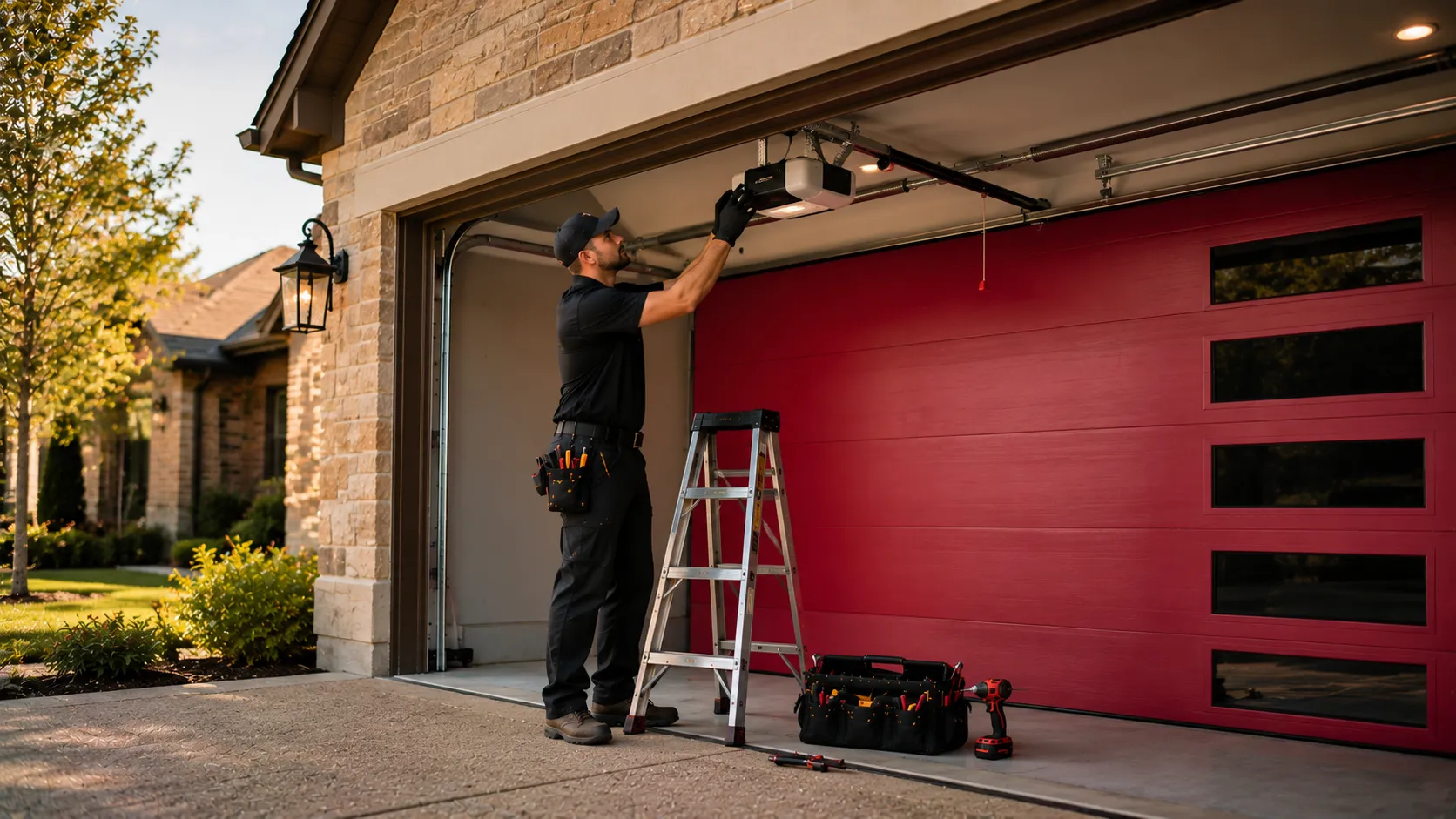
If your door is heavy to lift by hand but still moves, and the opener strains rather than stalls, you can usually wait a few days before calling anyone. Houses in this area were built between 1938 and 2005, with most of the stock going up in the 1980s and 90s, which means a lot of doors are still running the original torsion spring from that era. A spring that's stretched and slow isn't dangerous yet.
Waiting is a reasonable choice if the door still closes flush and the cable isn't visibly frayed or off the drum. What you shouldn't do is keep forcing an opener that's grinding against a stuck spring - that wears the gear set and turns a $200 spring call into a $400 opener call. Check that the tracks aren't iced over and that nothing binds when you lift manually with the opener disconnected.
If it lifts evenly and holds itself partway open, the spring still has tension and you have some time. If it drops the second you let go, that's a different situation, covered below. Doing nothing is a real option here, not a stall tactic - just don't confuse a slow door with a safe one.
The area
When to Get Help
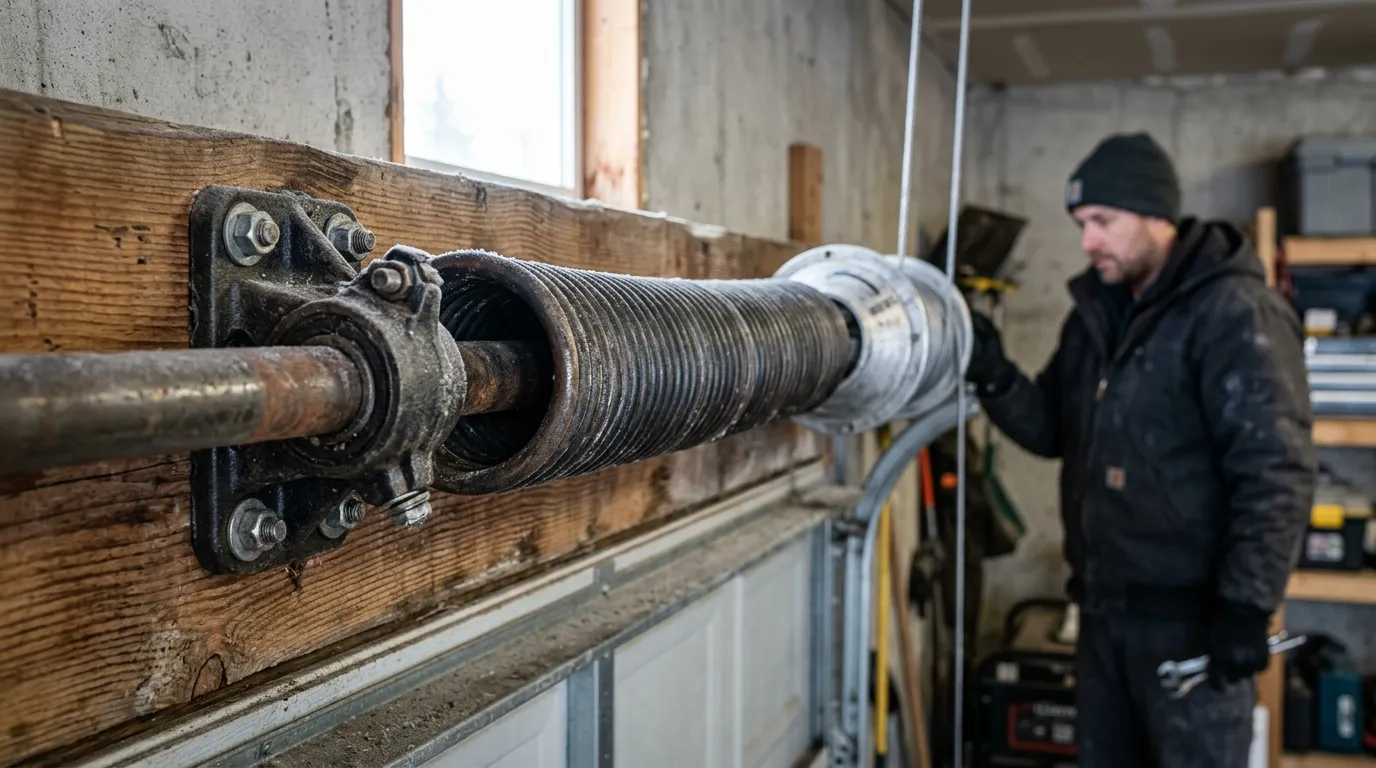
Call before the door fails completely, not after. A torsion spring on a 1980s-build door - which is the majority of what's out there in this service area - has a lot of miles on it by now, and cold makes the metal more brittle right when the door has to work hardest against a heavier, colder panel. If the door won't budge at all, if you hear a bang from the garage (that's usually the spring letting go), or if a cable has jumped the drum, stop using the opener and call.
Don't cut a wound spring yourself or try to rewind it - that's the way people get hurt. If you've got an older single-car door on a smaller property, or a wider double door common in the bigger lots around here, both put real load on aging torsion hardware once the temperature drops. One honest note: if the door is original to a 1980s build and hasn't had the spring replaced, waiting for a full failure usually costs more than a scheduled swap, since an emergency call after hours runs higher than a planned one.
What we find
The Problem
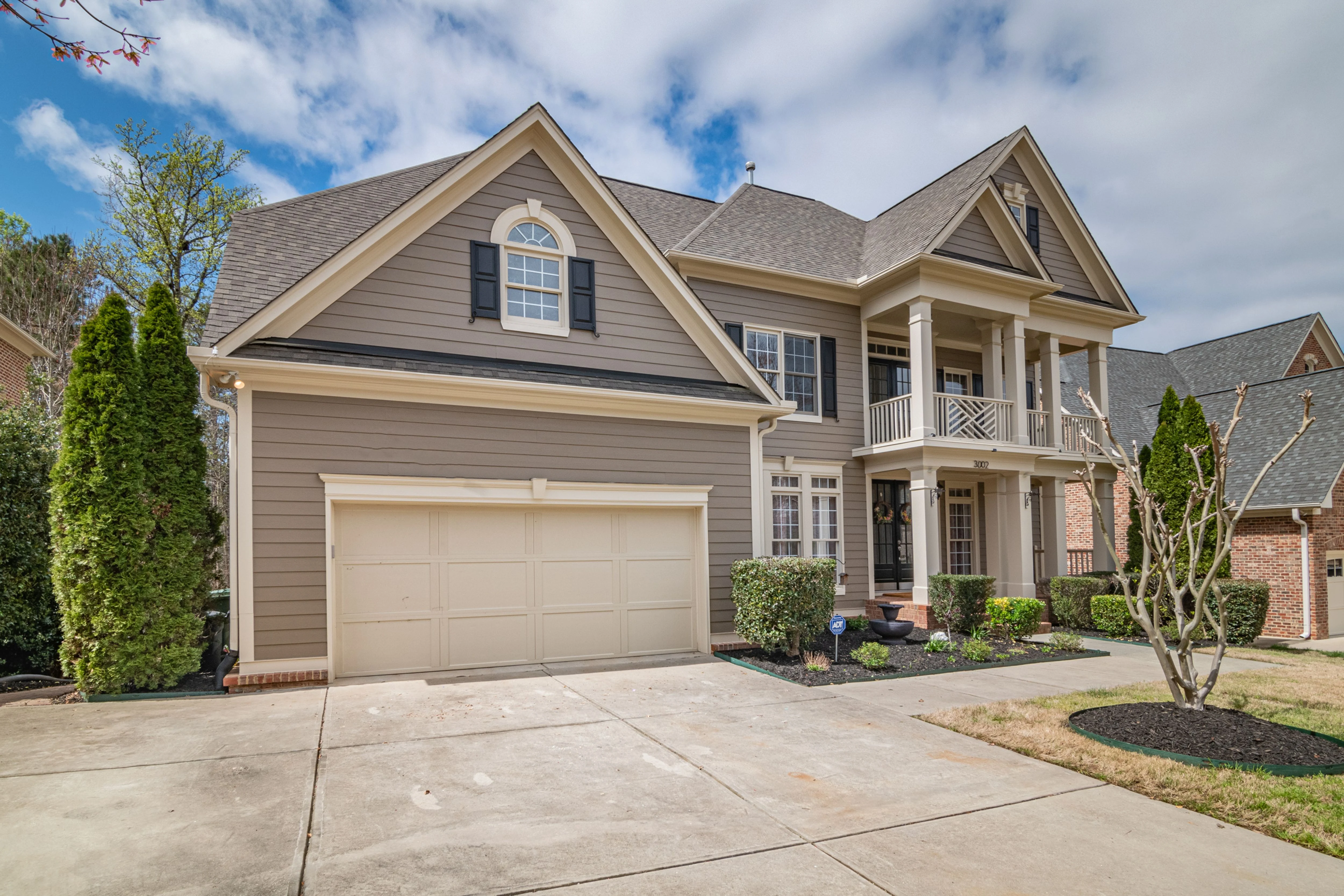
The core issue in this area isn't the door itself - it's the age of the hardware behind it. With housing built between 1938 and 2005 and most of it clustered in the 1980s and 90s across the named neighborhoods here, from Denver Tech Center a mile away to University Hills a few miles northwest, a lot of torsion springs, rollers, and cables are simply old. Steel fatigues with cycle count, and a spring wound forty years ago wasn't built for forty years of Colorado winters.
Add in higher household incomes in this area - the median here runs well above $130,000 - and a lot of these garages hold two vehicles and get used daily, which means more open-close cycles per year than a lightly used door. That's more wear, faster, on the same original spring. The problem compounds because a slow-failing spring doesn't announce itself until it's most of the way gone, and by then the opener has been quietly overworking to compensate.
How we work
What the Weather Here Does to It
This area sits in a severe cold climate band, and cold does two things to a garage door that heat never does. First, it stiffens the lubricant in the spring coils and roller bearings, so the door moves slower and the opener draws more current to compensate - that extra draw is what burns out gears and capacitors early. Second, cold steel loses some flexibility, so a spring that's already fatigued from age is more likely to snap on a hard winter morning than on a mild one.
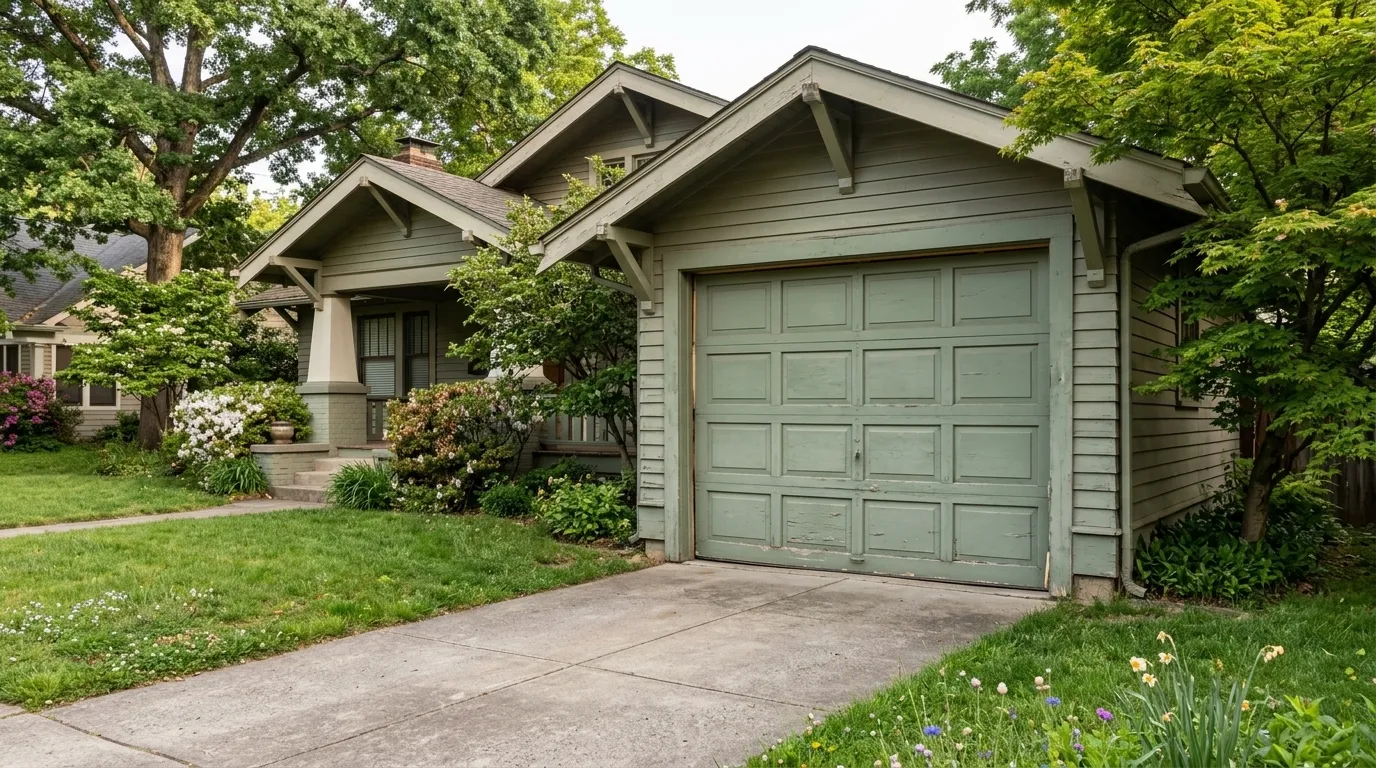
This matters more here because so much of the housing stock is from the 1980s and 90s - that's forty-plus years of temperature swings on the same coil. If your door has gotten noticeably slower or noisier as the temperature dropped this season, that's not a coincidence, that's the cold finding the weak point in hardware that was already due.
Questions
Common questions
Why does my garage door only act up when it's cold?
Cold stiffens the lubricant in the spring and rollers and makes aging steel less flexible, so a spring that's already worn from decades of cycles is more likely to bind or snap in winter than in summer. If your door is original to a 1980s or 90s build, that combination is common.
How old is a typical garage door spring in this area?
Housing here was built mostly between 1938 and 2005, with the bulk in the 1980s and 90s, so a lot of original torsion springs are pushing four decades old. We don't have exact replacement records for your specific door, but age alone is a good reason to have it checked before it fails in cold weather.
Is it safe to keep using the opener if the door is slow to open?
For a short while, yes - a slow door usually means a tired spring, not an unsafe one. Stop using the opener if the door drops on its own when you let go, if you hear a loud bang from the garage, or if a cable looks off the drum. Those signs mean the spring or cable has already failed.
Ready when you are
Need a garage door sorted in Greenwood Village?
Greenwood Village Garage Door Pros repairs and installs garage doors, springs and openers in Greenwood Village, CO and the surrounding area.