
Greenwood Village, CO
Garage Door Repair for Greenwood Village Homes
Garage door repair for Greenwood Village homes built mostly in the 1980s and 90s, where cold snaps and original torsion springs are the most common cause of a stuck or noisy door.
What we do
Garage door work in Greenwood Village
Local detail
How It Shows Up
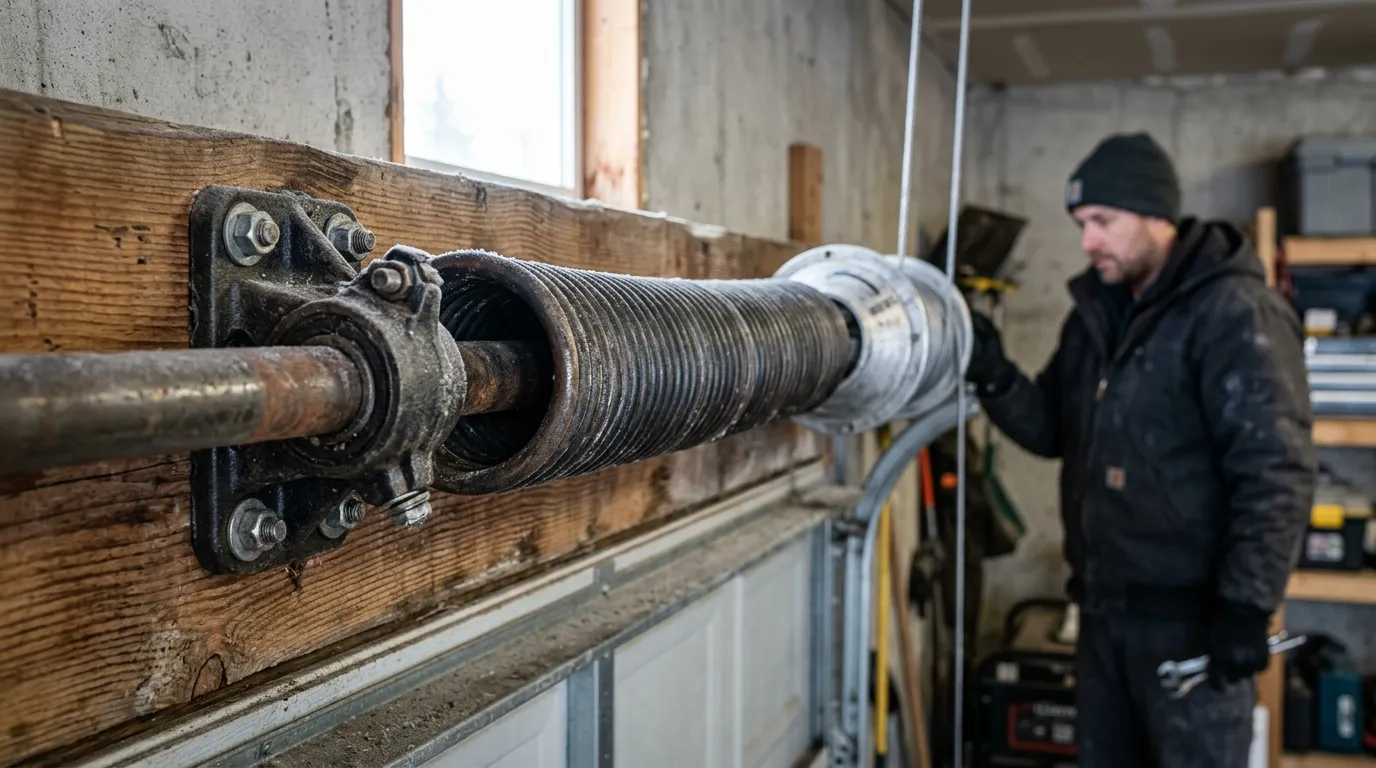
The call usually starts the same way: the door won't open, or it opens partway and stops. Sometimes there's a loud bang from the garage first - that's a torsion spring letting go, and it's the single most common reason we get a call in this area. Other times the opener runs but the door doesn't move, which points to a stripped gear or a cable that's jumped its drum.
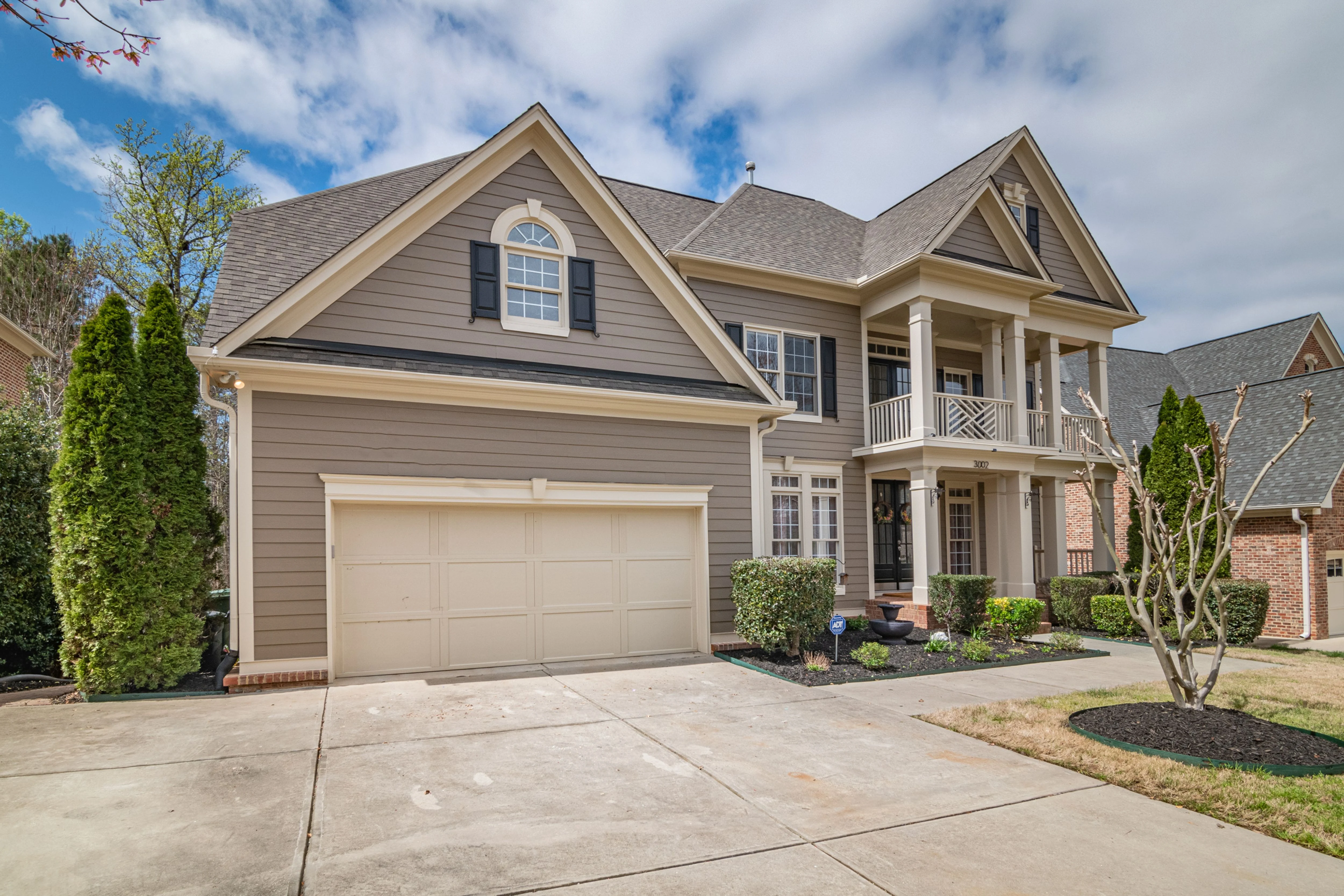
Because a lot of Greenwood Village's housing stock dates to the 1980s and 90s, we see a specific pattern here more than in newer subdivisions: original steel torsion springs that have simply run out of cycles. A spring rated for around 10,000 open-close cycles doesn't care how well you maintained the rest of the door - it fails on a schedule, and after three or four decades that schedule is up. If your door is original to a house built in that window, the spring is likely original too.
You'll also hear it before you see it. A door that groans, shudders, or drags on one side as it goes up is usually a roller or track problem, not a spring problem yet - catching it there is cheaper than waiting for the bang.
The area
Why It Happens Here
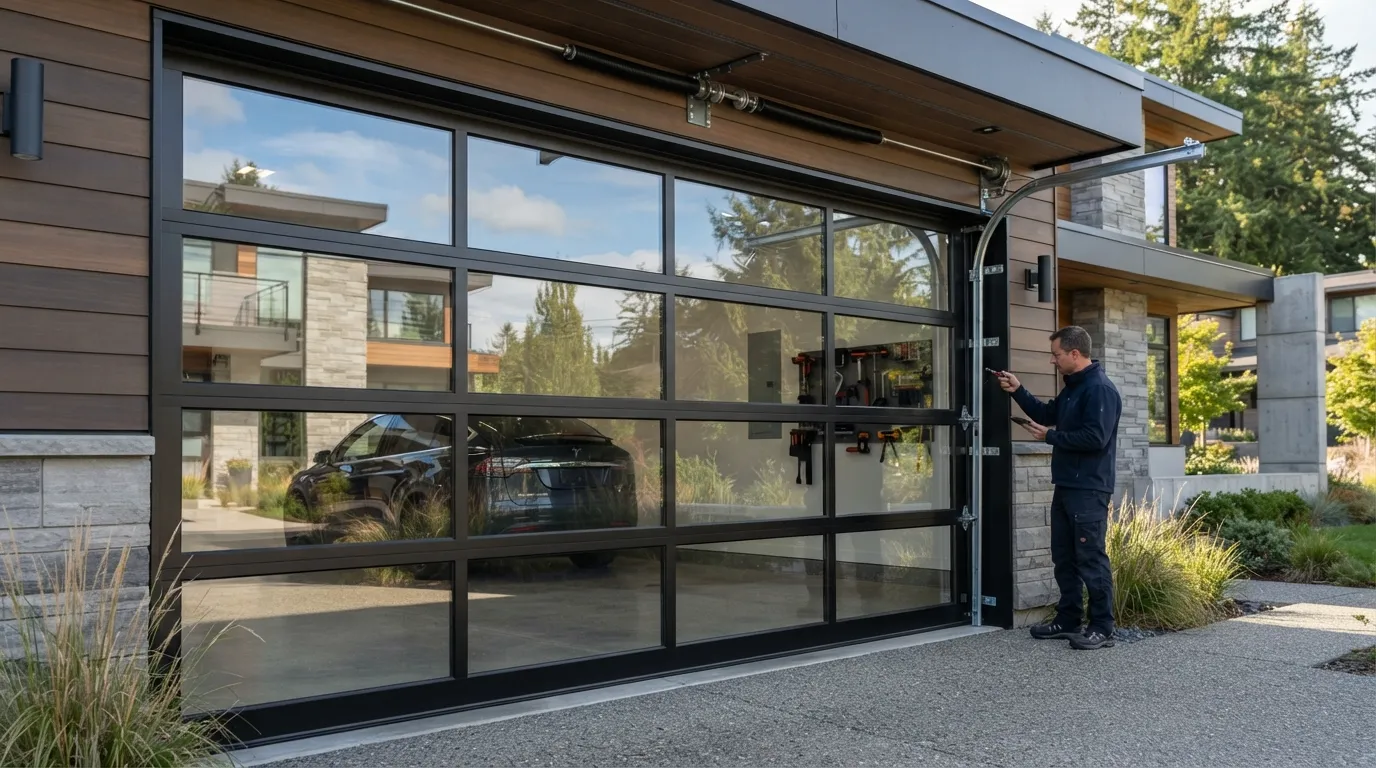
Two things stack up against garage doors in this area: age and cold. With median construction around 1980 across the neighborhoods we work in - University Hills, Southeast, Village East, and the rest of the 28 named areas in this territory - a large share of doors are still running the torsion hardware that came with the house. Steel fatigues with use regardless of climate, but Denver-area winters (F3, cold and severe) make it worse: cold metal is more brittle, and a spring near the end of its life is more likely to snap on a sub-freezing morning than in July.
Cold also thickens the grease in an old opener's gearbox and tightens tolerances in track alignment, so marginal problems that were tolerable in summer show up as full stoppages in January. We see this pattern repeat across the service area regardless of specific neighborhood - it's a function of when the house was built and what winter does to old steel and plastic, not a one-off. It's also why a spring failure in December often coincides with an opener that's been struggling quietly since fall.
What we find
Doing It Yourself
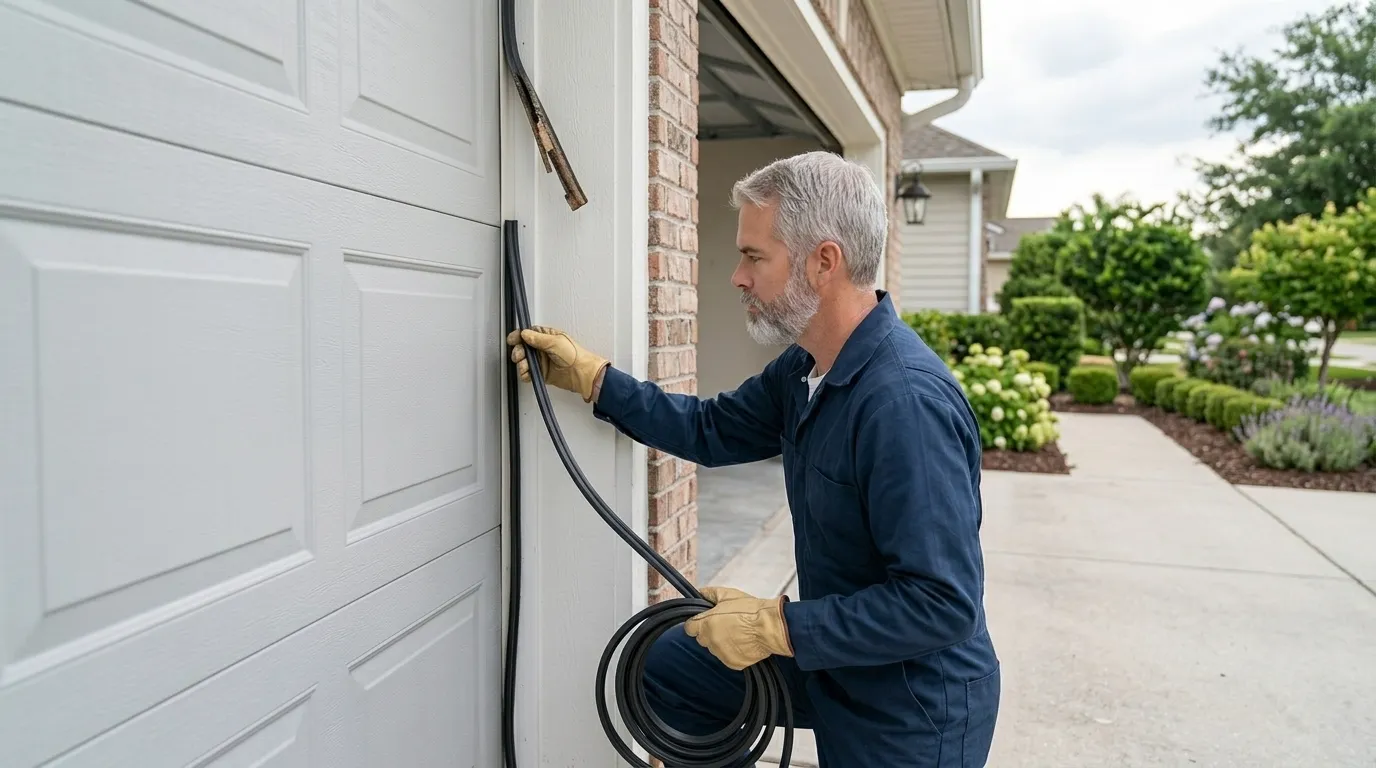
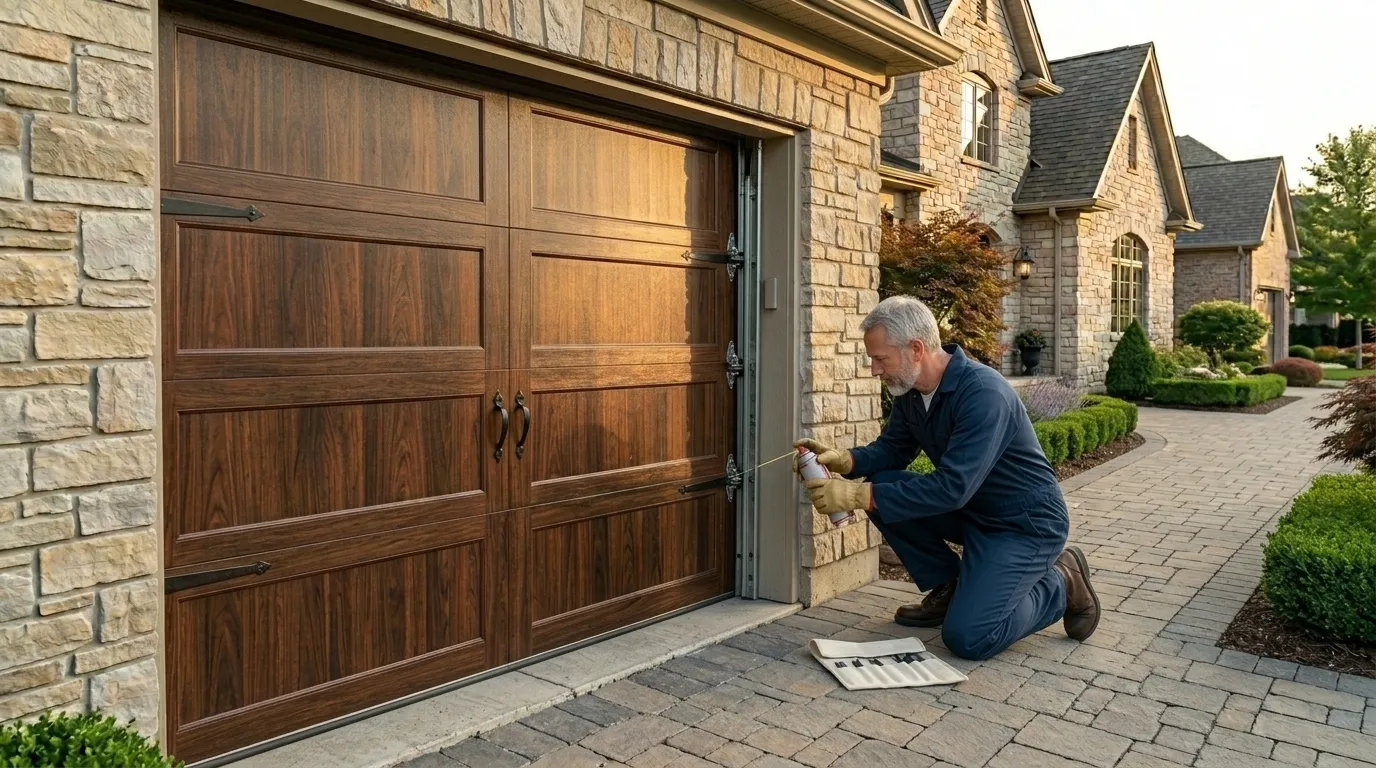
There's a limit to what's safe to do on your own here, and it's worth being honest about it. Tightening loose hinge bolts, cleaning and lubricating rollers and tracks, and checking that the photo-eye sensors are aligned and free of dust are all reasonable weekend jobs and can head off a bigger failure.
A torsion spring is not one of those jobs. It's under enough stored tension to cause serious injury if it's released wrong, and the tools to wind or unwind it safely aren't things most homeowners have lying around. If you hear a bang and the door won't move, or you can see a gap in a coil that used to be continuous, that's a call, not a project.
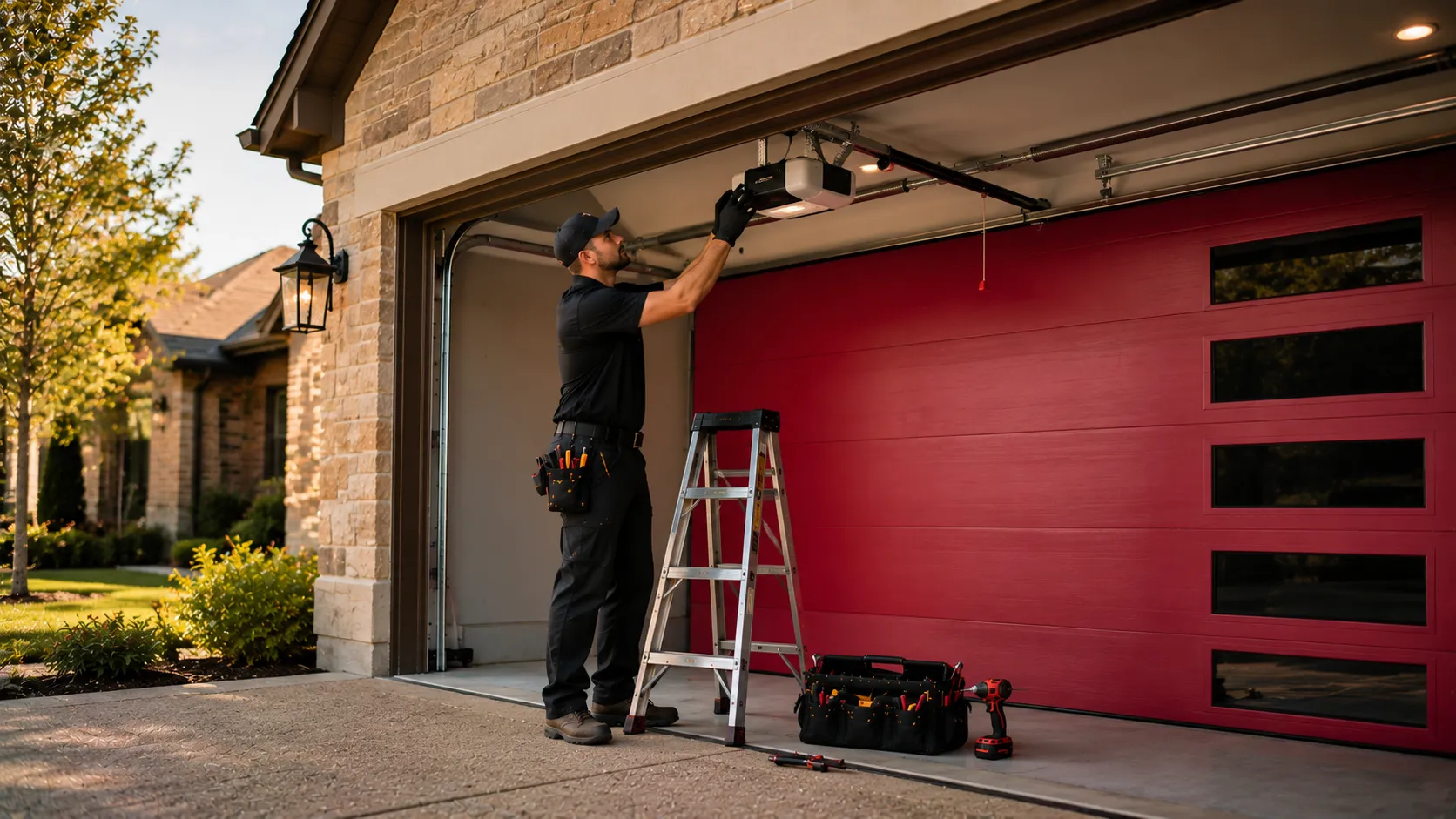
One honest limitation: if your opener is original to a 1980s or 90s build, replacement parts for that specific model are often out of production. In those cases we're usually recommending a new opener rather than hunting for a part that may not exist anymore - it isn't upselling, it's what the parts market actually looks like for hardware that old.
How we work
Where This Job Goes Sideways
The failure that costs the most is the one that gets ignored for a few weeks. A door dragging on one roller doesn't stay a roller problem - it puts uneven load on the opposite spring and cable, and now a $200 fix turns into a spring and cable replacement on both sides.
The other place this goes wrong is mismatched springs. On a lot of the older doors we see here, someone has replaced one spring at some point but left its neighbor, which was wound for the original pair. Two springs of different age or wind on the same door age unevenly, and the newer one ends up carrying more of the load than it's rated for - so it fails early, sometimes within a year of the first repair.
Given the age of the stock across this part of the metro and the swings a Colorado winter puts on old steel, we'd rather replace both springs as a pair when one goes, even though it costs more up front. It's the difference between one visit and two.
Questions
Common questions
Why did my garage door spring break in the middle of winter?
Cold makes steel more brittle, so a spring that's near the end of its rated life is more likely to give out on a freezing morning than in warm weather. In Greenwood Village, where a lot of doors still have their original 1980s or 90s torsion springs, winter is often when years of wear finally catch up.
Should I replace one spring or both?
If your door has two springs and one just broke, we generally recommend replacing both. Springs of different ages wear unevenly, and the older one usually fails again within a year or two of a single-side repair - especially on doors from the era common across this area.
Can I fix a broken garage door spring myself?
No. A torsion spring holds enough stored tension to cause a serious injury if it releases while you're working on it. Lubricating rollers, tightening hinges, and clearing sensor lenses are fine to do yourself; spring work isn't.
Is it worth repairing an original 1980s opener instead of replacing it?
Often not. Openers from that era can be hard to find parts for since the models are out of production. When we run into that, we'll tell you straight - it's usually cheaper long-term to replace the unit than to chase discontinued parts.
Ready when you are
Need a garage door sorted in Greenwood Village?
Greenwood Village Garage Door Pros repairs and installs garage doors, springs and openers in Greenwood Village, CO and the surrounding area.