
Guide
What Happens When You Wait on a Garage Door Problem Here
Greenwood Village homes built 1938-2005 face real winters. Here's what happens when a garage door problem sits, and when it's time to call someone.
Local detail
Doing Nothing For Now
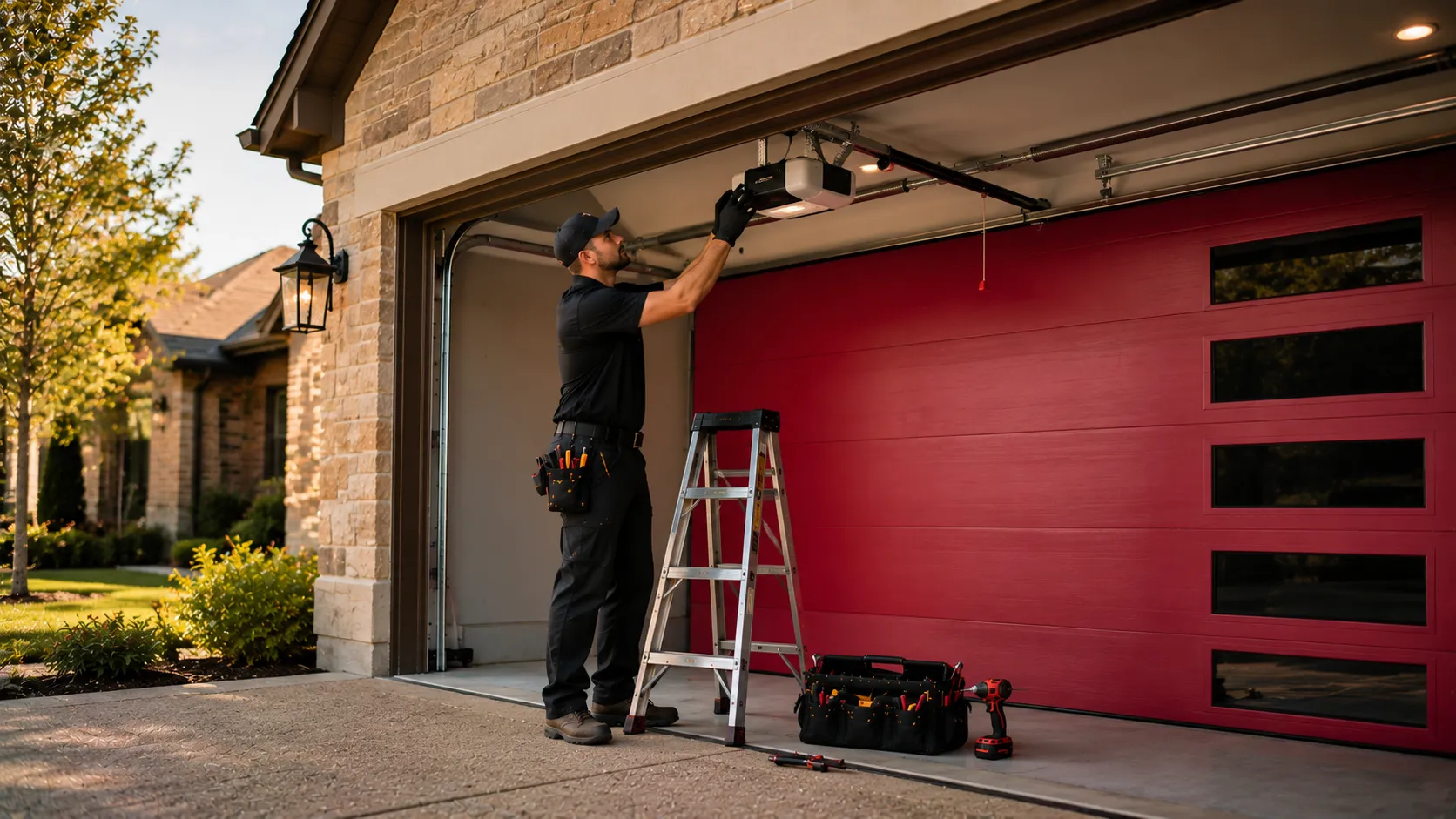
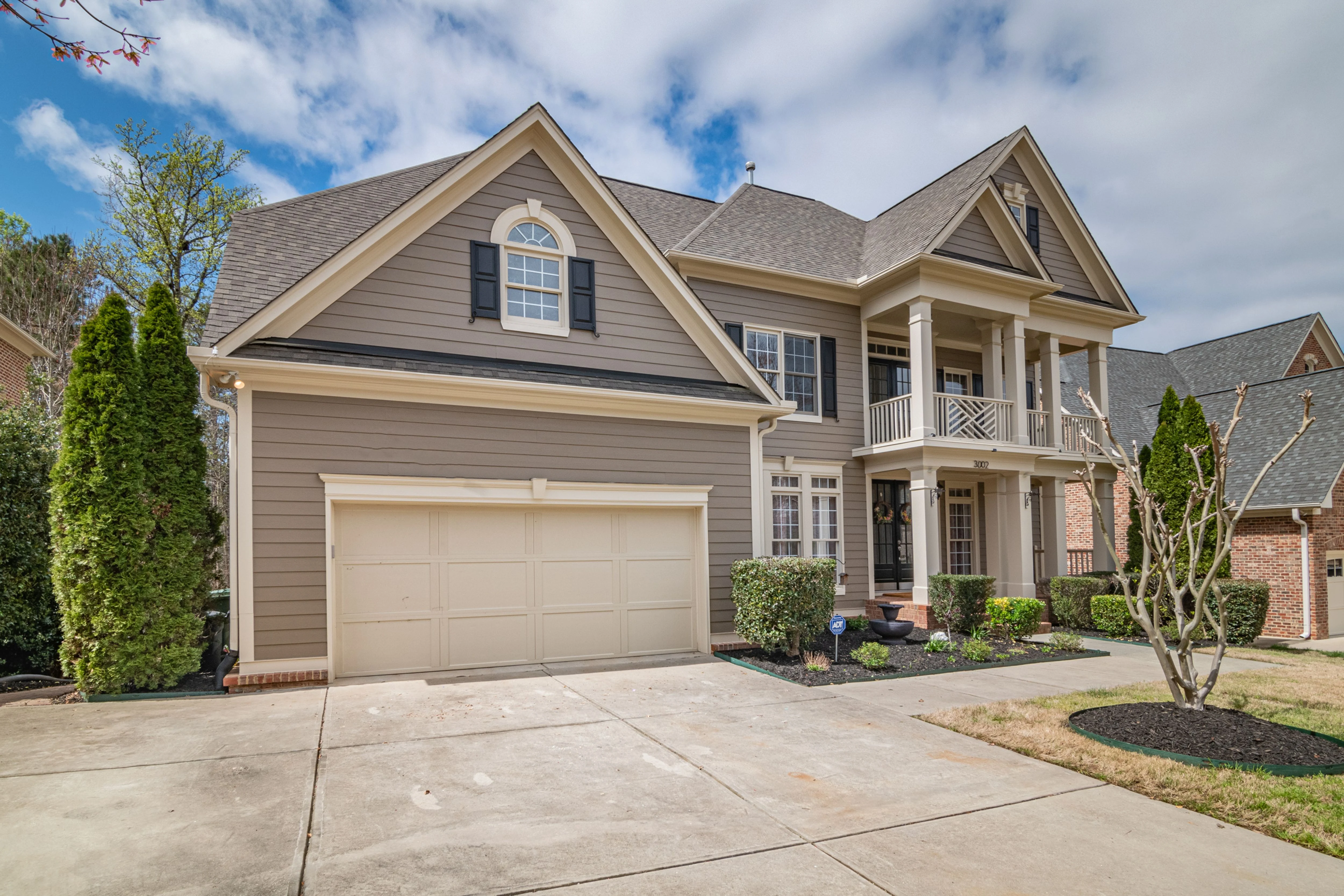
A lot of Greenwood Village houses sit on original hardware from the 1980s and 90s, since most of the local stock went up between 1938 and 2005 with the bulk clustered in that later stretch. A door that's a little stiff or a little loud on a house from that era is usually a spring or roller nearing the end of its life, not a new problem. If the door still opens smooth, closes flush, and the opener doesn't strain or reverse on its own, you can often leave it a season. What you shouldn't ignore is a door that's noticeably heavier to lift by hand than it used to be - that's a spring losing tension, and it doesn't get better by waiting.
On a two-car door that's original to a 1980s build, a spring going slack in cold weather is one of the more common calls we see, and it's cheap to deal with early and expensive to deal with after it snaps under load. Doing nothing is a legitimate choice for cosmetic wear. It's the wrong choice for anything involving the springs or cables holding the weight of the door.
The area
When to Get Help
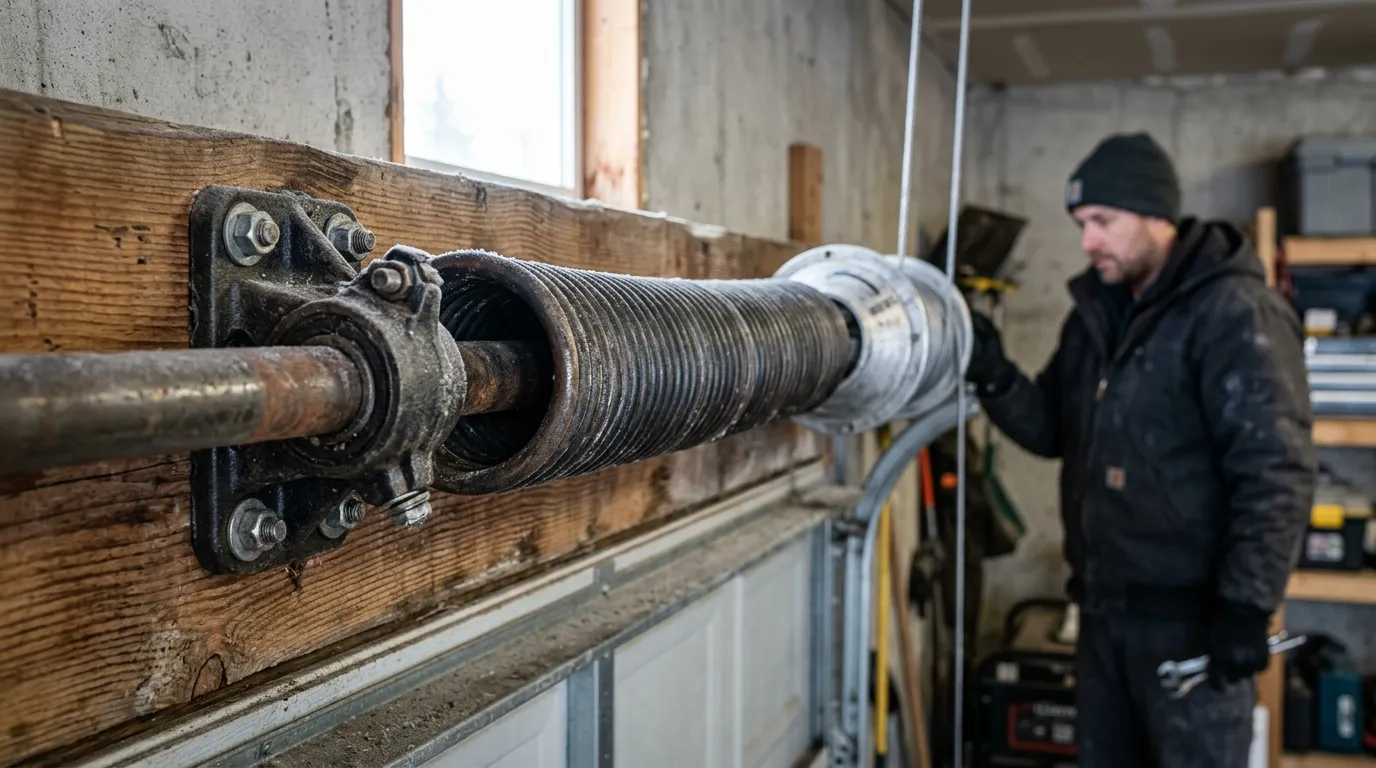
Call before the door fails all the way, not after. If a torsion spring on an older double door starts making a popping or grinding sound in cold weather, that's the metal fatiguing - get it looked at before it lets go, since a broken spring on a heavy door can drop fast and hard. Same goes for a cable that's starting to fray at the drum; on houses from the 1980s-90s stock that make up most of this area, original cable is well past its expected life and doesn't give much warning.
If the opener is straining, reversing without touching anything, or the door comes off track even slightly, that's not a maintenance item anymore. One honest limit here: if a part is proprietary to a specific 1980s opener brand that's long discontinued, we may need to replace the unit rather than chase a part that isn't made anymore. That's worth knowing before you call, not after.
What we find
The Problem
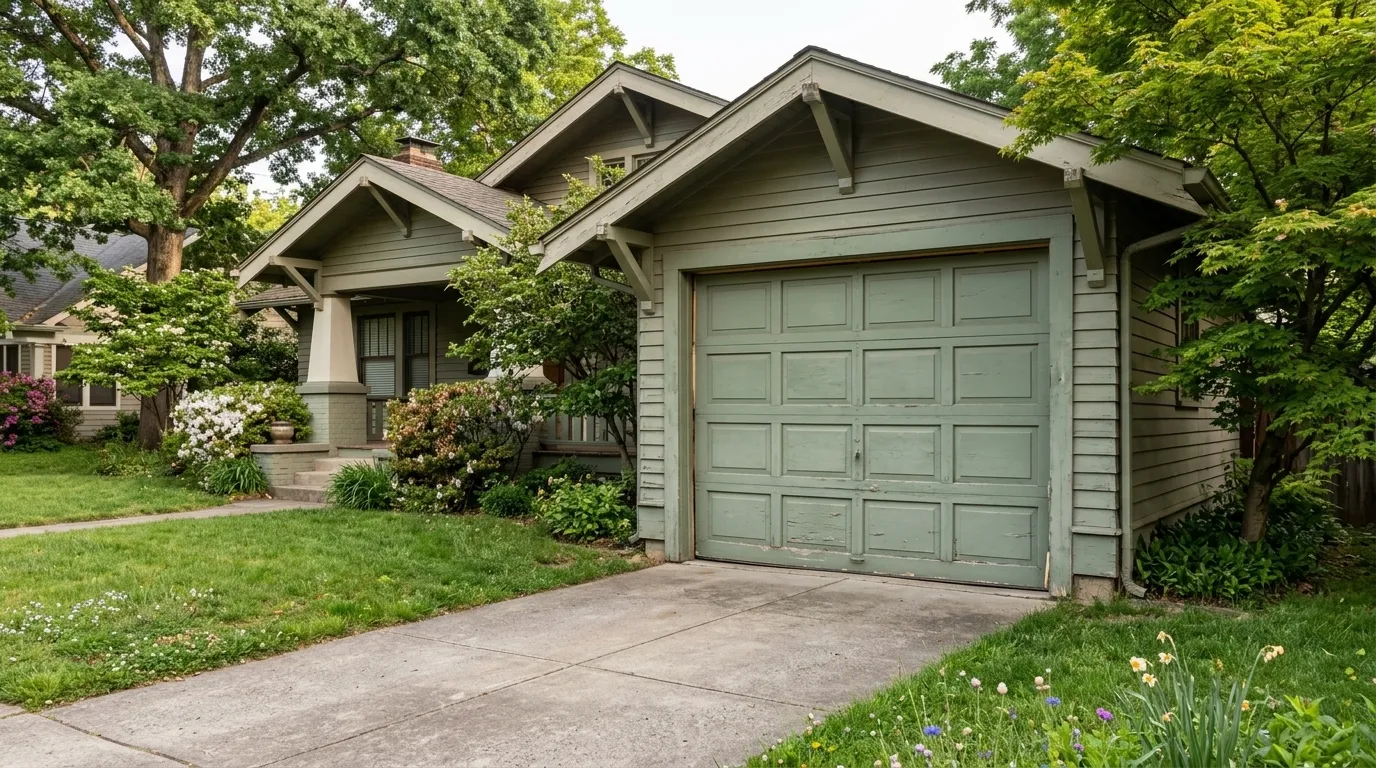
The core issue in Greenwood Village is age meeting climate. With housing built mostly between 1938 and 2005 and median build year around 1980, a large share of doors and openers in this area are old enough that the steel has fatigued and the lubricants have dried out, but young enough that owners assume they've got years left. That gap is where failures happen - usually in winter, usually without warning.
A severe cold climate band means metal contracts hard on the coldest mornings, and that's exactly when a spring near the end of its life picks to snap, or when a track that's a hair out of alignment binds and strains the opener motor. None of this is unique to any one house; it's the pattern across the 1980s-90s stock that makes up most of the neighborhoods here, from the streets near Denver Tech Center out toward University Hills and Southeast. The fix isn't complicated, but the timing matters more here than in a milder climate, because a marginal part that limps along in a mild winter can fail outright in a severe one.
How we work
What the Weather Here Does to It
Cold is the whole story for most of what goes wrong on a garage door in this area. Steel springs lose some of their flex as temperatures drop, so a spring that's already fatigued from age - common on doors from the 1980s median-build stock - is far more likely to snap on a hard freeze morning than in July. Grease and lubricant on rollers and tracks thickens in severe cold, which makes the opener work harder to pull the door up and can trip a strain sensor or burn out a motor over time.
Metal tracks also contract slightly in the cold, which is enough to turn a roller that was riding fine in summer into one that binds and grinds through the winter months. None of this is dramatic on its own, but stacked together - old hardware, severe cold, and a door that gets used daily - it adds up to winter being the season when garage doors in this area actually fail, not just squeak.
Questions
Common questions
How old does a garage door have to be before I should worry about the spring?
On houses built in the 1980s and 90s, which make up most of Greenwood Village's stock, original springs are well past typical service life. Age alone isn't a reason to replace one that's working fine, but combined with noise, visible gaps in the coils, or extra strain lifting the door, it's worth having checked before a cold snap.
Why does my garage door act up specifically in winter here?
The severe cold climate here stiffens grease and contracts metal tracks, which makes an aging opener work harder and can turn a marginal spring or roller into a failed one. It's the combination of an older door and a hard freeze, not one or the other, that usually causes the failure.
Can I just keep using an opener that's straining but still working?
You can for a while, but a motor that strains is burning itself out faster, and on a discontinued 1980s-era opener, a full replacement may be simpler than sourcing parts. If it's reversing on its own or making new noises, that's the point to stop waiting.
Ready when you are
Need a garage door sorted in Greenwood Village?
Greenwood Village Garage Door Pros repairs and installs garage doors, springs and openers in Greenwood Village, CO and the surrounding area.