Sedalia, Greenwood Village CO
Garage Door Service for Sedalia, 13 Miles Out
Garage door repair for Sedalia's older housing stock, 13 miles from our Greenwood Village base. We know what 1938-era garages need and don't pretend otherwise.
Local detail
How Soon We Can Come Out
We're honest about the distance: Sedalia is 13 miles from our base in Greenwood Village, farther than almost anywhere else on our coverage list. That doesn't mean we skip it, but it does mean we don't keep a truck sitting nearby the way we can for closer areas. If you call, we're driving out, not walking out of a shop down the block.
We don't have a stated response window we can promise for this area specifically, and we'd rather tell you that than make up a number that sounds good on a page. What we can tell you is that we do come out here, and we plan the drive into how we schedule the day. If your spring snaps on a Tuesday morning, say so when you call - it changes how we route the truck.
With only 25 households in Sedalia itself, this isn't an area where we're on a street every week. That's fine. It just means the person answering your call should know that going in, and so should you.
The area
The Houses Here
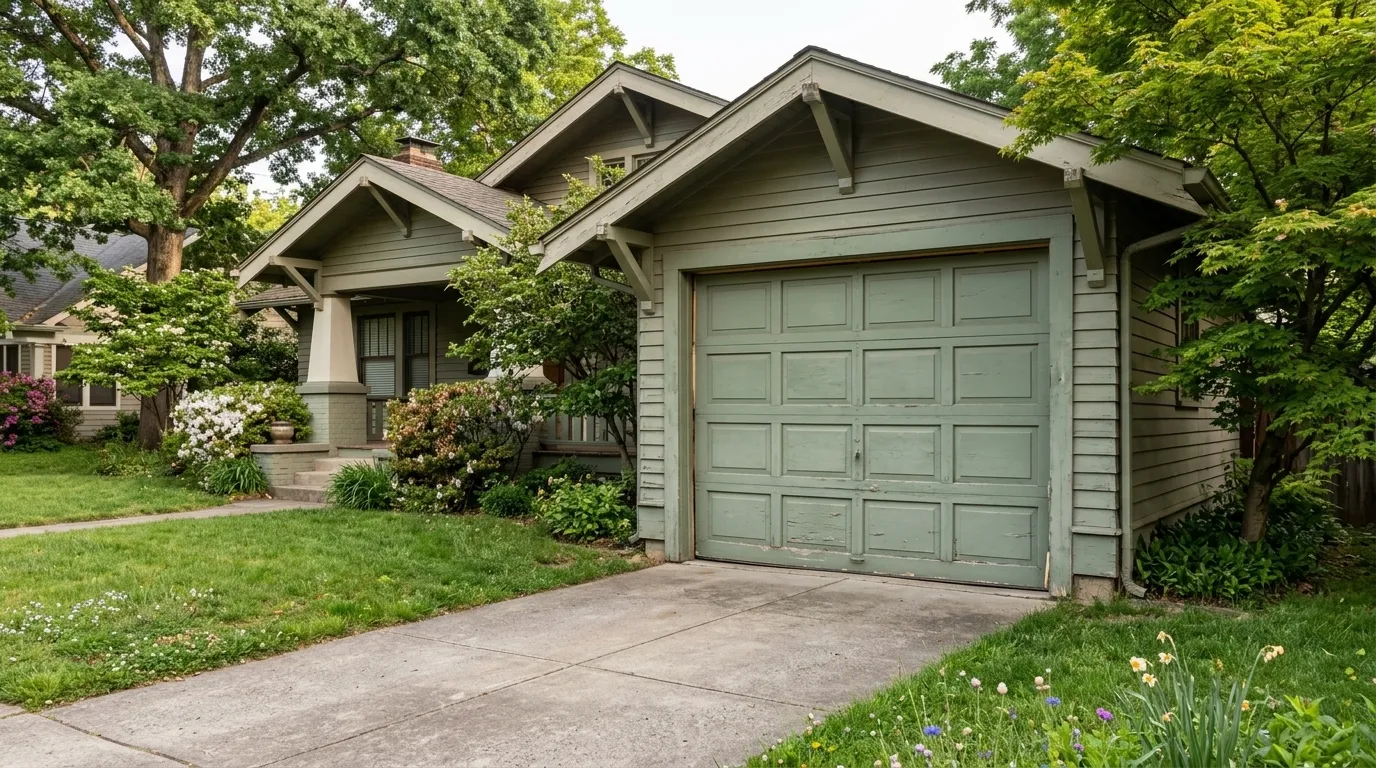
The numbers on this area stand apart from the rest of our coverage zone. Across the wider service area, the median home was built around 1980, with most stock going up in the 1980s and 90s. Sedalia's median build year is 1938 - more than four decades earlier. That's not a rounding difference. It's a different generation of house, and a different generation of garage.
A home built in 1938 wasn't necessarily built with an attached garage at all. Where garages exist here, many were added later, retrofitted onto older framing rather than built alongside it from the start. Openings can run narrower or oddly proportioned compared to the standardized 16-foot double and 9-foot single openings that came standard once production-built subdivisions took over in the 80s.
With just 25 households in the area, we're not talking about a subdivision with one dominant floor plan repeated a hundred times. Every property here tends to be its own case, built on its own timeline, which matters more than it would somewhere with a single dominant era of construction.
What we find
What the Housing Means for Your Door
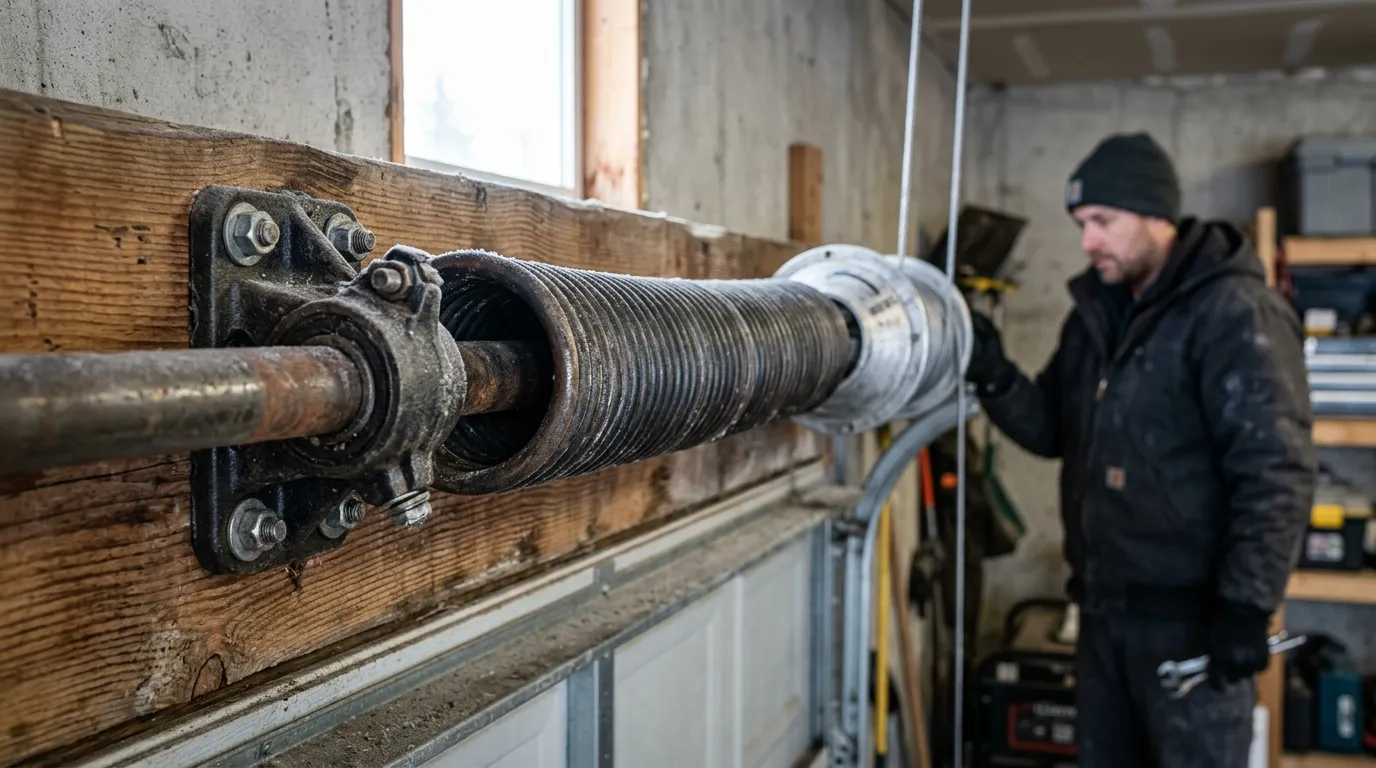
Older framing changes what we're working with before we even open the toolbox. A door hung on wood jambs from the 1930s or 40s behaves differently than one hung on steel-framed openings from the 1980s - the wood shifts, settles, and can be out of square in ways newer construction rarely is. Track alignment on an out-of-square opening isn't a five-minute fix; it's a slower job of shimming and checking as you go.
We're also working in a cold-climate service area, and that matters regardless of build year: springs sized for one temperature range behave differently in sustained cold, and lubricant that's fine in summer gums up in winter. Combine severe cold with 1930s-era wood framing and you get doors that stick, bind, or drag more than the same door would on a newer opening.
One honest limit: if the opening itself is out of true, sometimes the right call is reframing before a new door goes in, not just swapping panels. We'll tell you that straight rather than sell a door that won't sit right in a bad opening.
How we work
The Calls We Get From Here
Given the age of construction in this area, the calls tend to skew toward hardware that's worn out rather than hardware that's failed suddenly - cables frayed from age, rollers that have been metal-on-metal for years, openers bolted onto framing that's shifted slightly over eight decades. It's less often a single dramatic spring snap and more often a door that's been getting harder to lift for months before someone finally calls.
We also hear from people dealing with openings that don't match modern standard door sizes, since a lot of this stock predates the standardized dimensions builders use now. That can mean a repair takes longer to source parts for, or that replacement means a custom-sized door rather than an off-the-shelf one.
We don't have local job stories or specific past addresses to share here, and we won't invent any. What we can say is that the pattern in older-stock areas like this one is consistent: aging hardware, non-standard openings, and cold-weather wear on top of both.
 40 areas covered
Service areas
Other areas we cover near Sedalia
Questions
Common questions
Do you have a location in Sedalia?
No. We're based in Greenwood Village, about 13 miles away, and we drive out to Sedalia rather than operating from a spot nearby. That distance is worth knowing when you're deciding how urgent same-day scheduling needs to be.
Why would my garage door need different parts than a newer house?
Sedalia's median home was built around 1938, decades before the 1980s stock common across most of our coverage area. Older framing and non-standard opening sizes mean some doors here need parts sourced or custom-sized rather than pulled off a standard shelf.
Is it worth repairing an old garage opening or better to replace the door?
It depends on whether the opening itself is square. If decades of settling have thrown the frame out of true, sometimes reframing before installing a new door is the better use of money than repeatedly patching an old one into a bad opening.
Does the cold affect older doors more?
It can. This is a cold-climate service area, and springs and lubricants behave differently in sustained cold regardless of the door's age. On a door already dealing with 80-plus-year-old wood framing, cold-weather binding tends to show up sooner and more often.
Ready when you are
Need a garage door sorted in Greenwood Village?
Greenwood Village Garage Door Pros repairs and installs garage doors, springs and openers in Greenwood Village, CO and the surrounding area.