
Forty-year cable aging
Those doors were hung on drum-and-cable setups sized for that specific panel weight, and forty-plus years of Colorado winters have not been kind to the galvanized coating on those cables.
Applewood, Greenwood Village
Applewood's 1970s-era garage doors run steel cables on aging drums built for a lighter door. We drive out from Greenwood Village to replace snapped or frayed cables correctly.
Warning signs
Most garages in Applewood went up around 1970, which puts the original door - if it's still there - in the era of single-layer steel panels, wider and heavier than the aluminum or insulated doors that came later.
Those doors were hung on drum-and-cable setups sized for that specific panel weight, and forty-plus years of Colorado winters have not been kind to the galvanized coating on those cables.
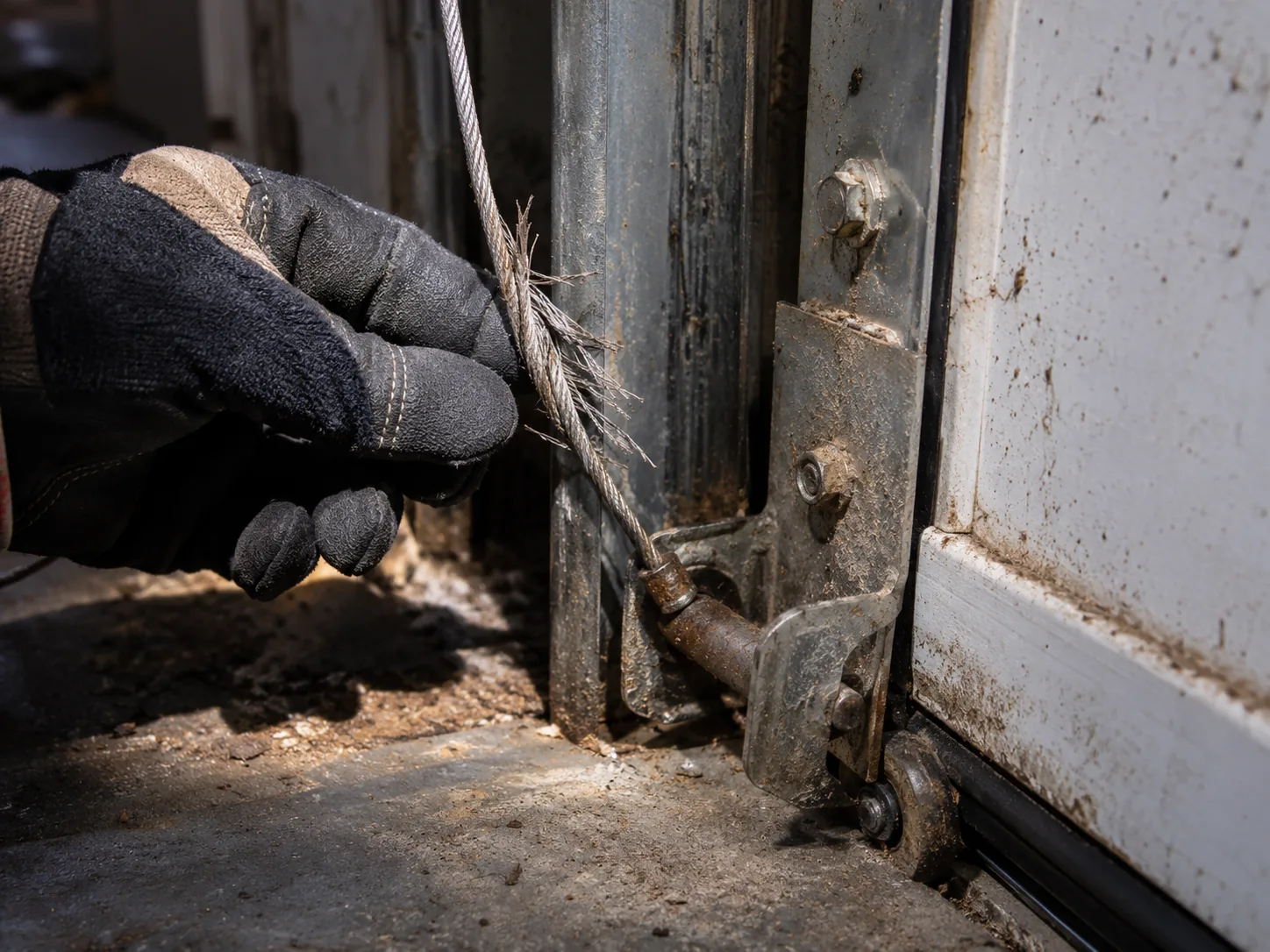
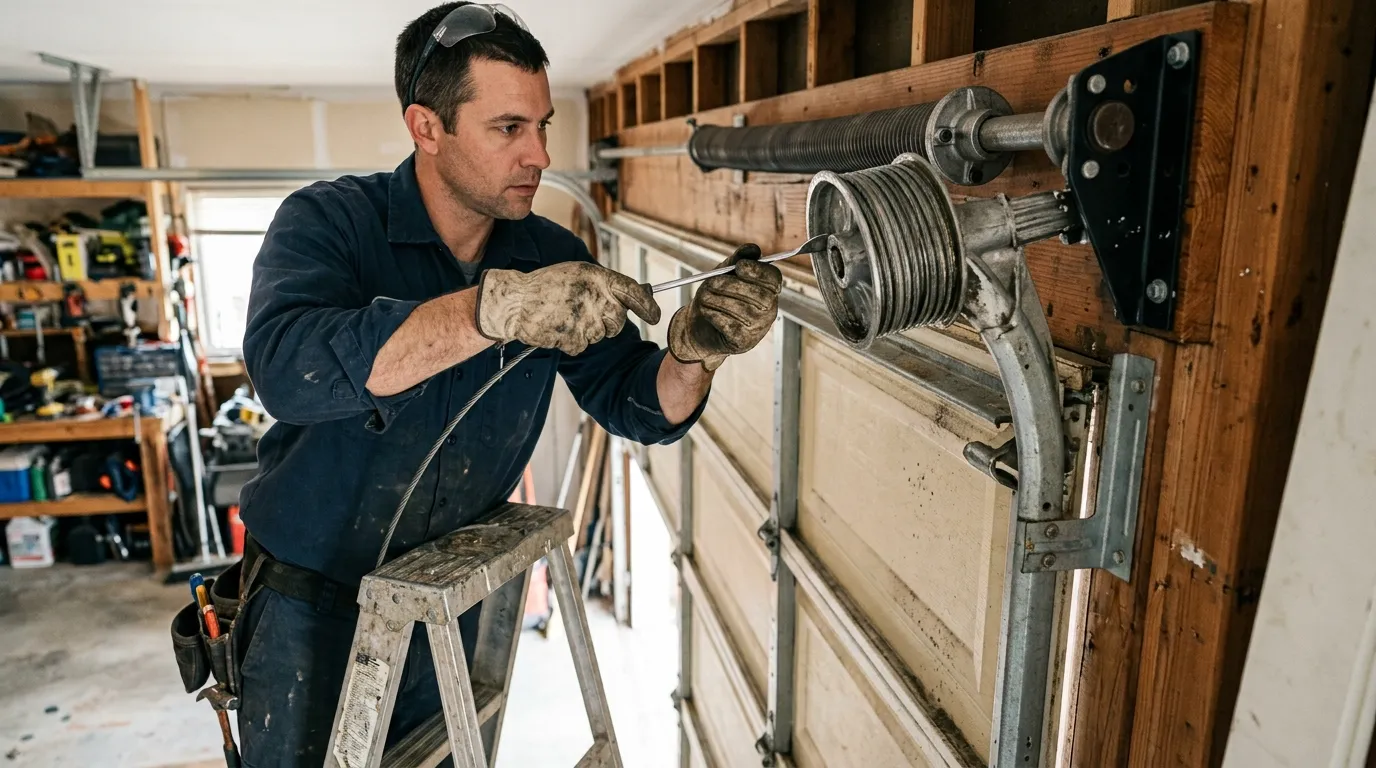
You'll usually notice it as a door that drops unevenly on one side, a loud pop followed by the door refusing to move, or a cable you can see has gone from tight and silver to frayed and rust-orange where it wraps the drum.
Sometimes the door just sits crooked in the opening, hanging by the one cable that hasn't given out yet. That's not a door to keep running - a second cable failure with the first one gone means the full weight of the panel comes down on whatever's underneath it, torsion spring or not.
Our process
We come out from Greenwood Village, about 17 miles in, so we bring the cable sizes and drums for both the original-era doors still common in Applewood and the replacement doors that have gone in since.
First we release tension on the spring system safely - never work a cable job with the spring still loaded - then pull the old cable off the drum and check the drum itself and the bottom bracket for wear grooves, since a groove-worn drum will chew through a new cable in months.
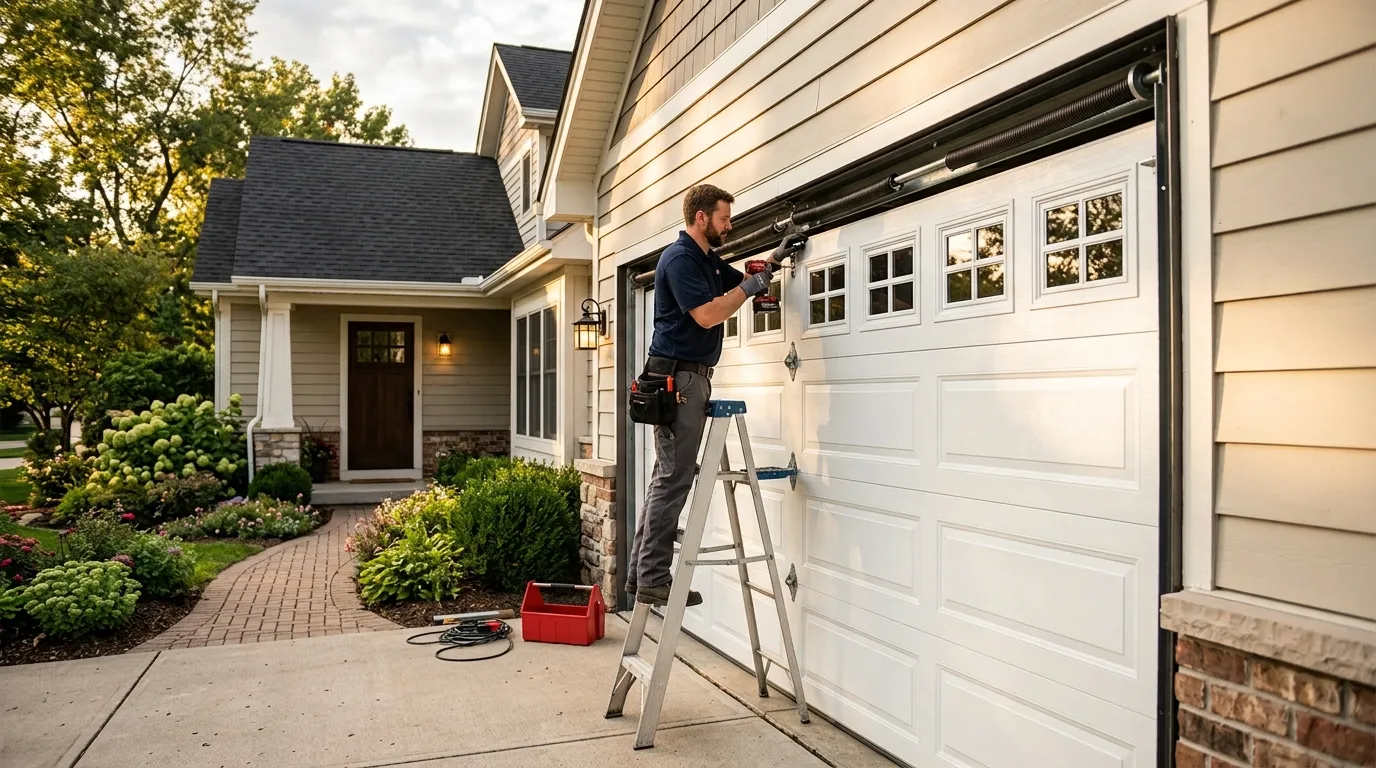
We match cable gauge to the actual door weight rather than guessing, reset the drums evenly on both sides, and re-tension before we test the door through a full open-close cycle under load.
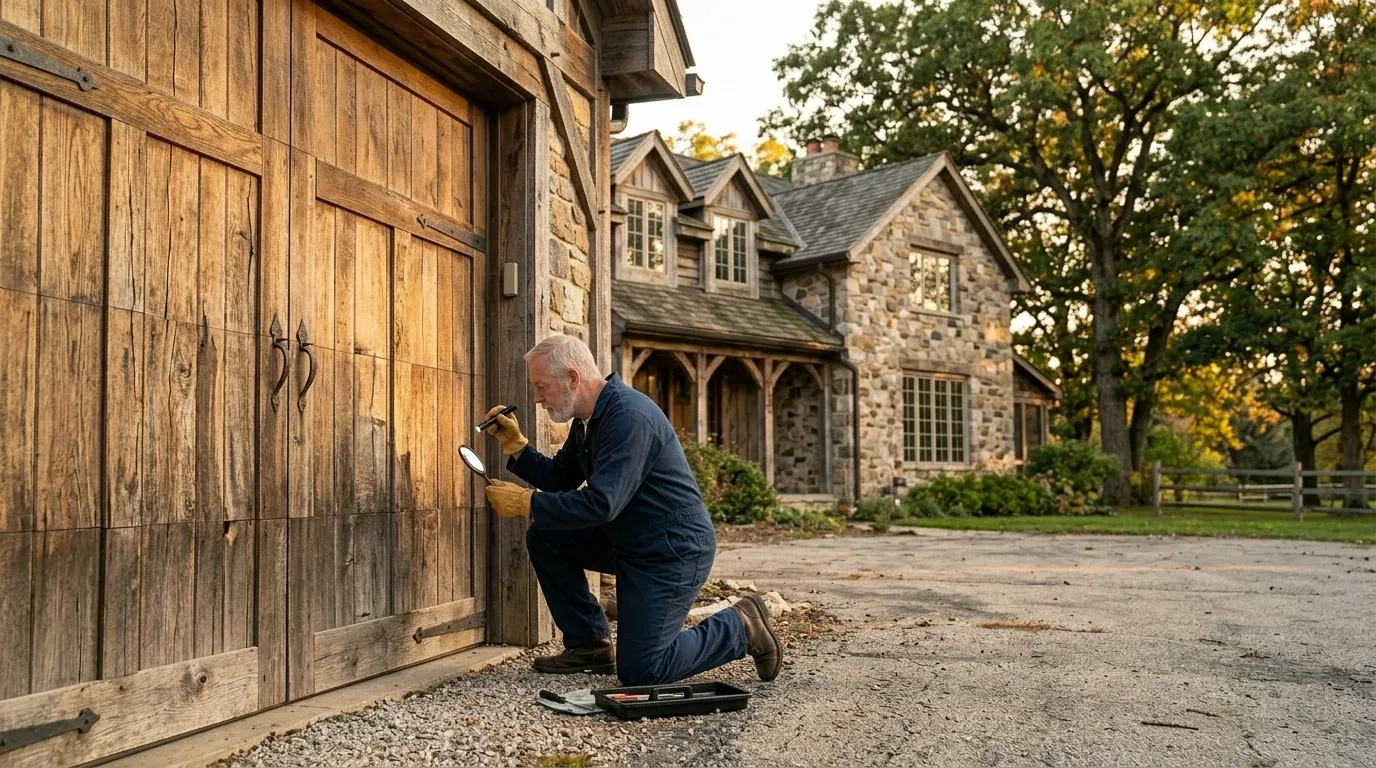
If the track or rollers show the same age-related wear, we'll say so, but we don't sell a full overhaul when the job in front of us is two cables.
Local causes
A 1970 median build year means a lot of Applewood's garage doors are original steel single-layer panels or early replacements, both of which lean on drum-and-cable lift rather than the cable-and-spring assist used on lighter modern doors. Colorado's cold band hits that hardware two ways: the galvanized cable coating gets brittle in sustained low temperatures, and the steel drum contracts slightly, which changes how evenly the cable seats in the groove. Combine an older, heavier door with hardware that's outlived its coating and a winter that stresses the metal, and cable failure becomes a when, not an if, for houses built in this window. Newer doors in the same neighborhood, replaced in the last decade or two, don't show the same failure pattern because the cable gauge and drum tolerances are tighter to begin with.
On the truck
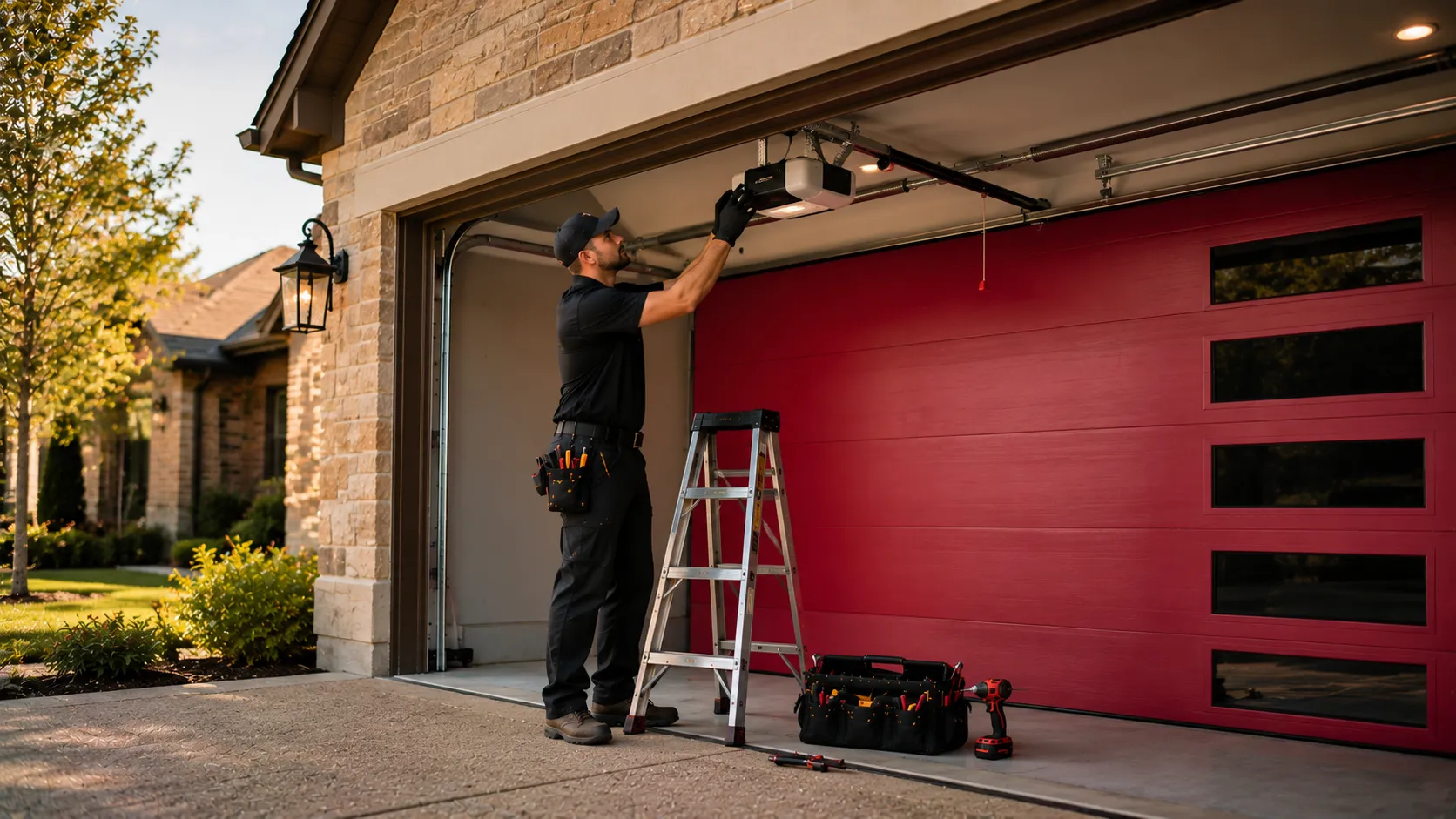
For Applewood calls we carry standard 1/8-inch and 7x19 aircraft cable in the lengths that fit the drum sizes on doors from the 1960s-1980s building wave, plus the thicker gauge some early steel doors need for their extra weight.
We stock galvanized cable as standard since it holds up better against the cold than bare steel, and we carry matching drums for when the old one shows groove wear instead of trying to reuse it.
What we don't carry on the truck is custom or oversized cable for a non-standard door - if a door's been modified or is an unusual width, that part gets ordered and the job takes a second visit.
Pricing
Cable repair pricing depends on whether one cable failed or both, whether the drums need replacing along with the cable, and whether the spring system needs to be reset from scratch after the cable comes off. A single-cable job on a standard door is a straightforward repair; a job where the drum is grooved or the second cable is close to failing too runs longer because we're replacing more parts to avoid a return call. We'll give you the number for your specific door and cable count before we start, not after.
Watch-outs
The job gets harder when the drum itself is worn past the cable groove, because a new cable on a bad drum just fails again in a shorter time, so we replace both rather than half-fix it. It also gets harder on doors where a previous owner or handyman ran a mismatched cable gauge - we've seen thinner cable jammed onto a drum built for heavier gauge, which strips the drum groove and turns a cable swap into a drum-and-cable job. And if the bottom bracket has bent from the door dropping unevenly before the second cable failed, that bracket needs straightening or replacing too, which is a separate line item we won't skip just to keep the quote low.
Questions
Cables rarely snap without warning - they fray gradually where they wrap the drum, and the fraying often happens on the inside of the loop where you can't see it without pulling the door open manually. Cold weather makes the galvanized coating brittle faster, which is common on older Applewood doors built with heavier steel panels than newer replacements use.
You can, but we don't recommend it. If one cable failed from age or wear, the other one on the same door has usually seen the same years of cold and the same drum wear, so it's close behind. Replacing both at once costs less than two separate service calls.
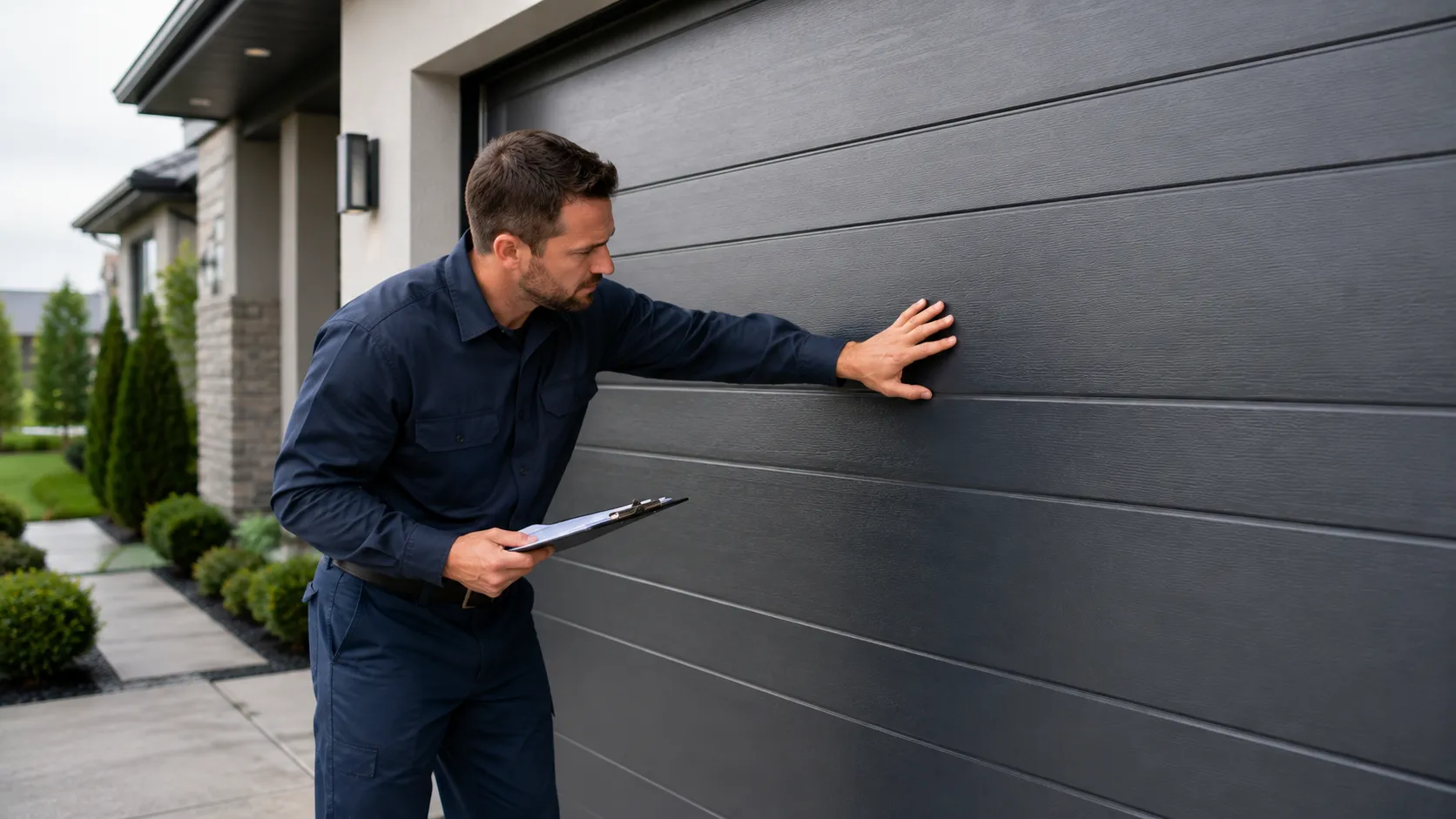
Not usually, if the door itself is straight and the panels aren't rusted through. A cable and drum swap on a sound older steel door is a fraction of a full replacement cost. We'll tell you honestly if the door's condition means the cable fix won't hold.
Explore more
Ready when you are
Greenwood Village Garage Door Pros repairs and installs garage doors, springs and openers in Greenwood Village, CO and the surrounding area.