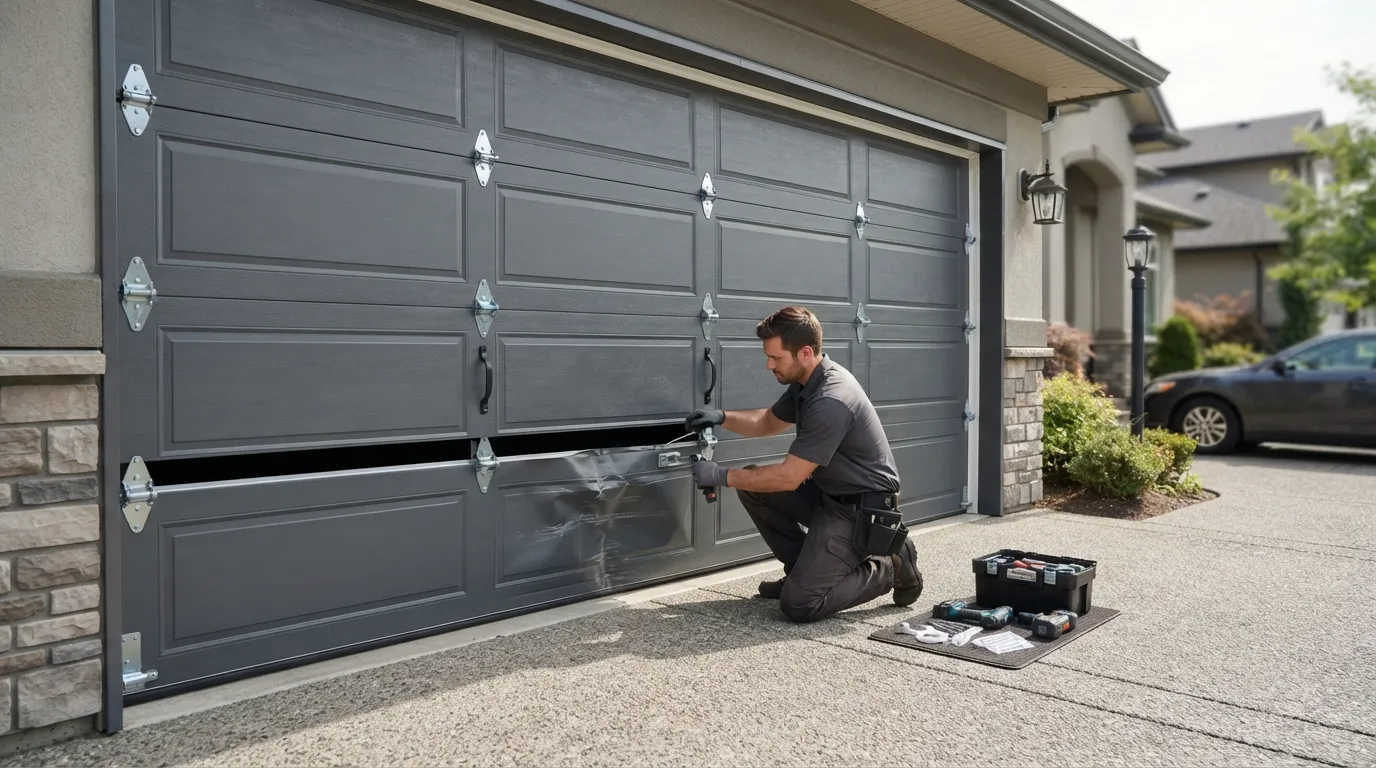
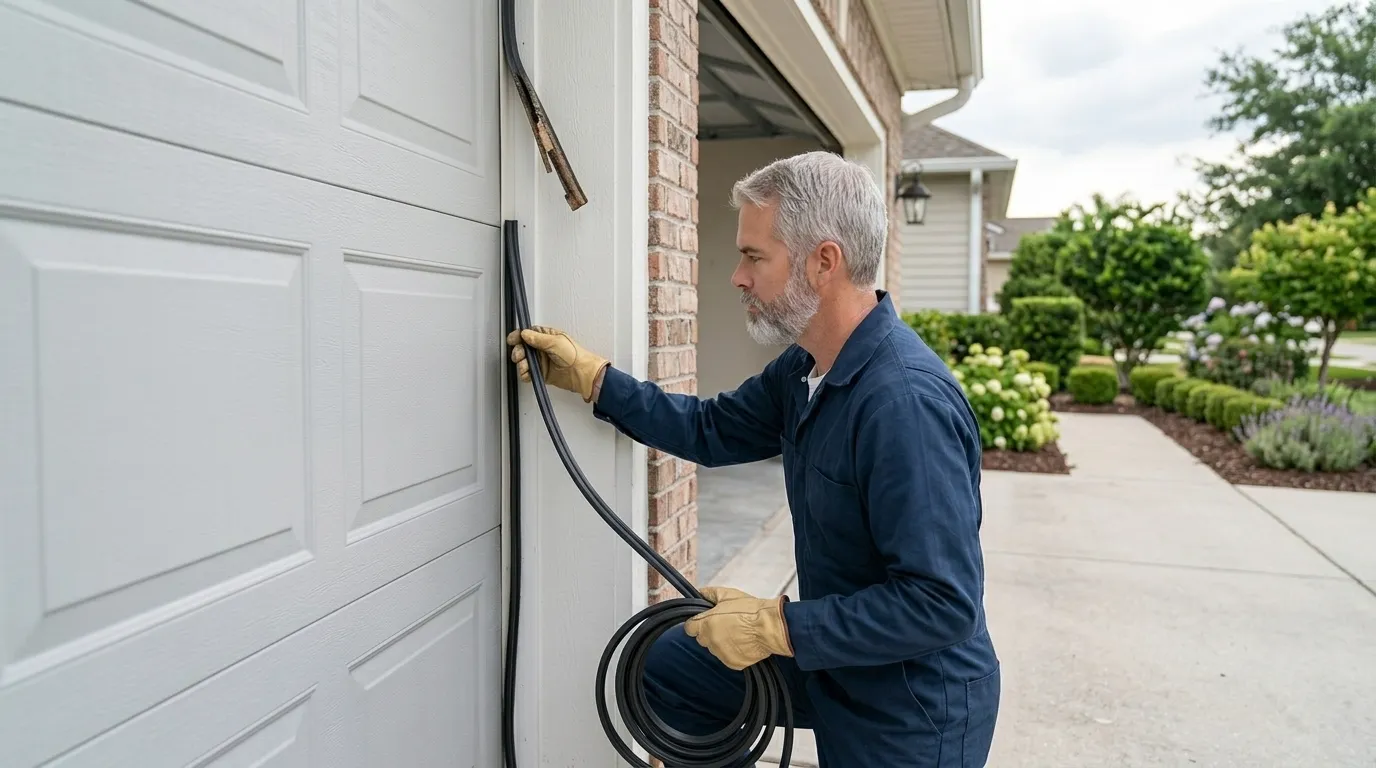
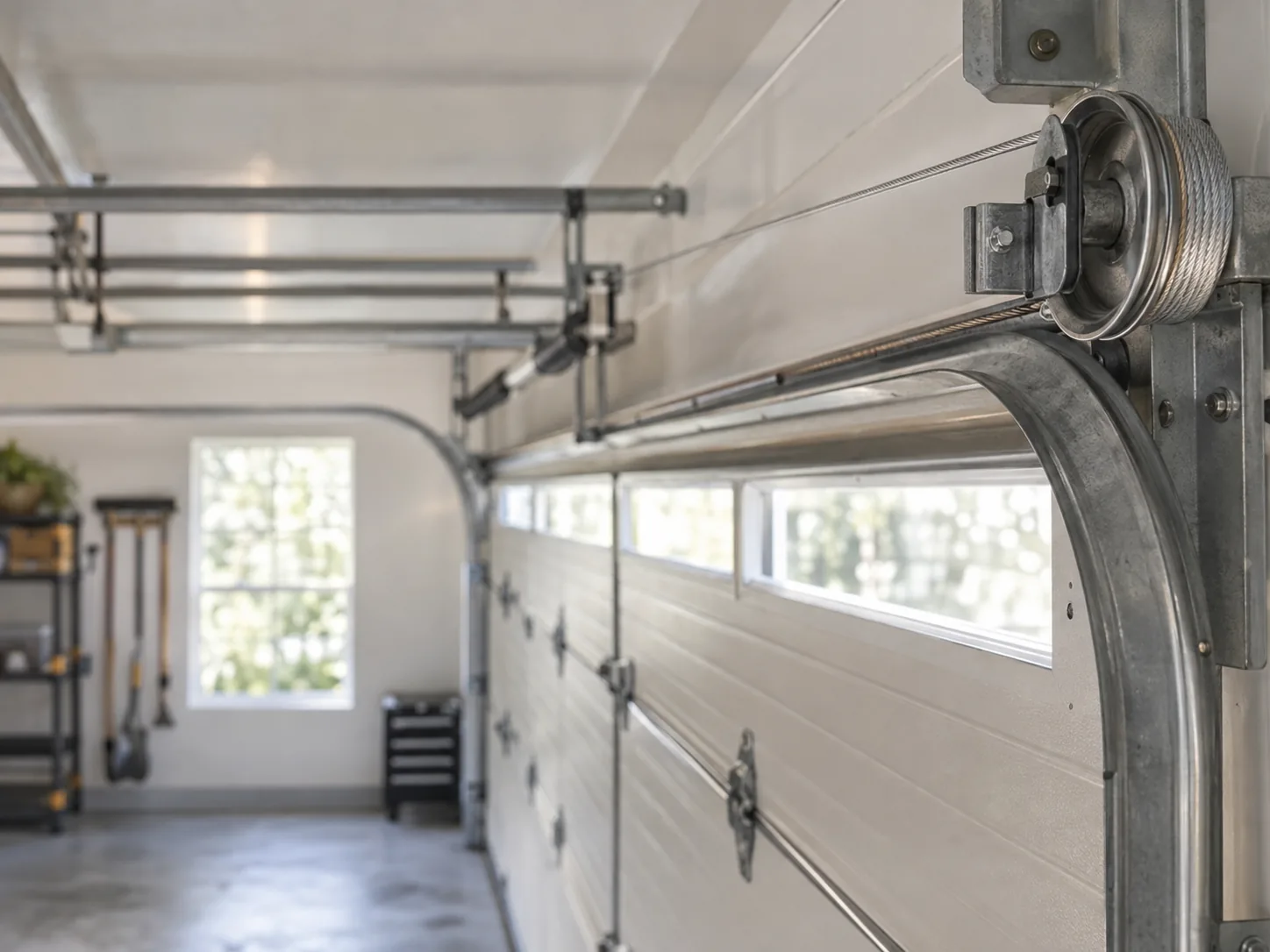
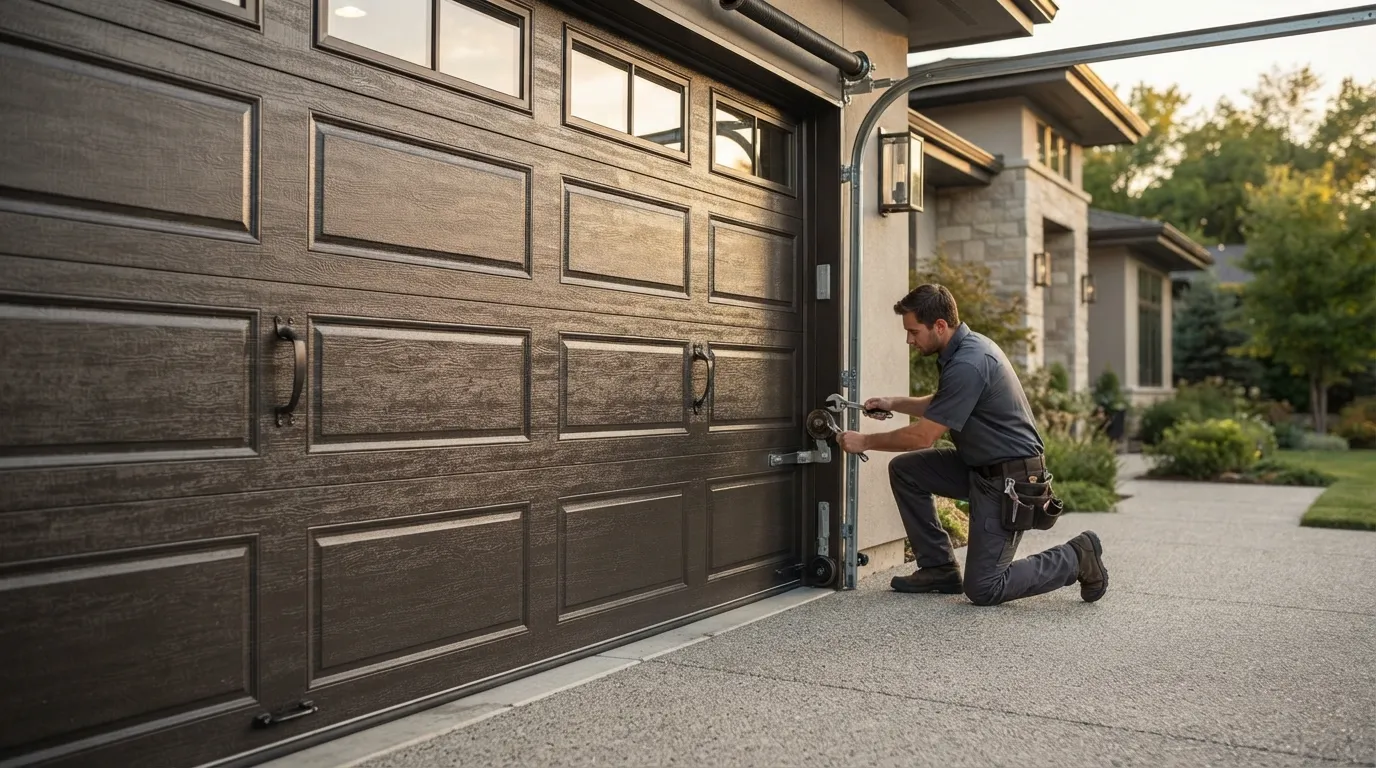
Two things stack on top of each other in this area: the age of the housing and the climate band. With most of the 28 named neighborhoods in this part of the metro built out in the 1980s and 90s, a big share of doors are hitting the end of their practical life at roughly the same time, not spread evenly across decades. Add a cold, severe winter climate and the wear pattern is specific - steel panels contract and expand through freeze-thaw cycles, bottom seals harden and crack in the cold, and torsion springs that were fine at installation lose tension faster once temperatures swing hard from day to night. A door built for a milder climate zone, or installed without an insulated panel because that wasn't standard when the house went up, works harder every winter than a comparable door would somewhere warmer. That's why a straight repair - new spring, new seal - sometimes buys a season, and sometimes doesn't buy anything, because the frame and track have shifted with the house.